1
Lecture Overview
Aims of Analysis Model
■ Building on outputs of Requirements Model
■ Basic UML notations
■ Introduction of new types of analysis objects
■ Reuse of use cases
■ Inputs for Design Model
■
© Wolfgang Emmerich, 1998/99
2
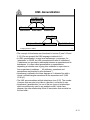
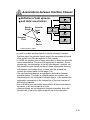
• The lecture begins by placing the analysis model in the theoretical
context of Jacobson’s overall view and then building on the outputs
from the requirements model stage as the inputs for the next steps in
production.
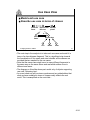
• We will then introduce basic UML notations for classes and object etc.
in order to provide the means for representing classes and objects
defined in the requirements model in order to refine them in the
analysis model.
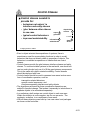
• It is then possible to introduce the roles of different types of classes
identified by Jacobson (interface, entity and control). The separation of
these roles supports and simplifies the successive modelling of
classes in the design phase and makes the analysis model more
expressive.
• The use cases are used, and refined, as a means to guide, and
evaluate the analysis work. This is done by tracking the descriptions of
each use case to the influence it had on specifications of classes and
objects.
• The cumulative generation of outputs (i.e. the enriched use cases and
the class diagrams) provide the inputs for the design model, the first
part of the ‘construction phase’ which is subject of lectures 5 and 6.
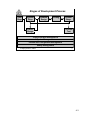
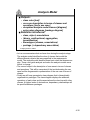
• Let us now use the overview picture of last week to review where we
are...
4-2