1
5.8 Safety Measures
5.8.1 Safety Measures
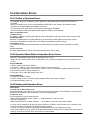
Precautions regarding system design
On the system using PLC, malfunction may occur for the following reasons:。
- Power on timing differences between the PLC and input/output or mechanical power apparatus.
- Response time lag when a momentary power drop occurs.
- Abnormality in the PLC unit, external power supply, or other devices.
In order to prevent a malfunction resulting in system shutdown, choose the adequate safety measures
listed in the following:
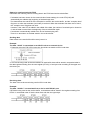
Interlock circuit
When a motor clockwise/counter-clockwise operation is controlled, provide an interlock circuit externally.
Emergency stop circuit
Provide an emergency stop circuit to the PLC externally to turn off the power supply of the output device.
Start up sequence
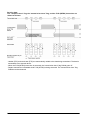
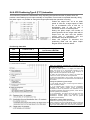
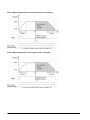
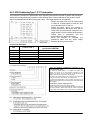
The PLC should be started after booting the I/O device and mechanical power apparatus. To keep this
sequence, the following measures are recommended.
- Turn on the PLC with the mode selector set to the PROG. mode, and then switch to the RUN mode.
- Program the PLC so as to disregard the inputs and outputs until the outside devices are energized.
Note) In case of stopping the operation of the PLC also, have the input/output devices turned off after the
PLC has stopped operating.
Grounding
When installing the controller next to devices that generate high voltages from switching, such as
inverters, do not ground them together. Use an exclusive ground for each device.
5.8.2 Momentary Power Failures
Operation of momentary power failures
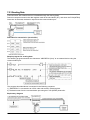
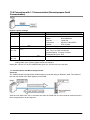
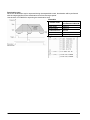
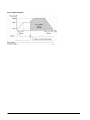
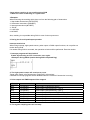
If the duration of the power failure is less than 5 ms, the FP0R continues to operate. If the power is off for
5 ms or longer, operation changes depending on the combination of units, the power supply voltage, and
other factors.
(In some cases, operation may be the same as that for a power supply reset.)
5.8.3 Protection of Power Supply and Output Sections
Power supply
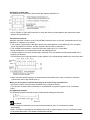
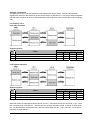
An insulated power supply with an internal protective circuit should be used. The power supply for the
control unit operation is a non-insulated circuit, so if an incorrect voltage is directly applied, the internal
circuit may be damaged or destroyed.
If using a power supply without a protective circuit, power should be supplied through a protective
element such as fuse.
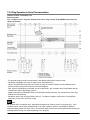
Protection of output
If current exceeding the rated control capacity is being supplied in the form of a motor lock current or a
coil shorting in an electromagnetic device, a protective element such as a fuse should be attached
externally.
5-18