1
2
Low Noise / High Resolution DAC
1. Description and Applications
The Low Noise / High Resolution DAC (LNHR DAC) generates eight independent, low
noise and ultra-stable voltages. The output range of ±10 V, combined with the 24-bit
resolution, allows adjusting the voltages with a step size of only 1.2 µV. The output
voltage noise is well below 1 µVRMS (typically 0.5 µVRMS), measured in a frequency range
of 0.1 Hz to 100 Hz. Each channel can be independently switched ON (active driven) or
OFF (grounded by 100 kOhm). The device has an alpha numeric display and can be
locally as well as remotely controlled via RS-232 or Ethernet.
Such low noise and ultra-fine tunable voltages are often needed for fundamental physics
experiments at very low-temperatures. For those experiments constant DC bias-voltages
and high resolution sweep-voltages with very low fluctuations (noise) are mandatory;
e.g. for driving gate voltages. Since the typical load resistances of such gates are very
high, the output current of the device is relative small (±1 mA) and the output source
resistance is relative high (500 Ohm).
With an output bandwidth of DC…75 Hz the LNHR DAC can be used for DC-biasing, for
ramping/sweeping and for low frequency waveform generation at high impedance
loads.
2. Front-Panel
On the left the eight DAC voltages are fed to the front-panel via eight BNC connectors. A
yellow LED above the BNC connector indicates the status (ON/OFF) of the DAC channel.
The large front-panel recesses for the BNC connectors make sure that the outer
conductor doesn’t make an electrical connection to the housing (earth). Make sure that
the outer conductors of your attached BNC cables do not contact the front-panel.
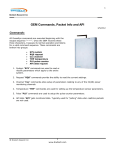
Photo 1: The front-panel of the LNHR DAC with all DAC channel switched on.
The common floating ground of the DAC voltages can be shifted up to ±20 V, with
respect to the housing (earth), by applying an external bias voltage. This bias voltage has
to be connected to the BNC connector (Bias Voltage Input) on the right. Note, when using
this feature the common ground of the DAC outputs is no longer floating and ground
loops may degrade the performance of the device.
On the most right part of the front-panel the LC-display and the rotary/push knob
(encoder) can be found.
LNHR DAC
User’s Manual - Revision 1.6
Physics Basel