1
2
1.0
Introduction
CALMIM (CAlifornia Landfill Methane Inventory Model) is a field-validated, 1-dimensional transport
and oxidation model that calculates annual methane emissions for individual California landfill sites
based on the major processes that control emissions:
•
Surface area and properties of the daily, intermediate, and final cover materials,
The % of surface area for each cover type with engineered gas recovery, and
Seasonal methane oxidation in each cover type as controlled by climatic factors.
The driving force for emissions is the methane concentration gradient through each cover type coupled
with dynamic soil moisture and temperature profiles which control methane transport and microbial
methane oxidation rates over a typical annual cycle. CALMIM is an IPCC (Intergovernmental Panel on
Climate Change) Tier III methodology for methane emissions from solid waste disposal sites based on a
“validated, higher quality” model (IPCC, 2006).
Based on 2.5-cm (1 inch) depth increments and 10-min time steps, CALMIM calculates daily methane
emissions on an areal basis for each individual cover (g CH4 m-2 d-1). The daily emissions are summed to
provide annual totals for each cover and for the site as a whole for a typical annual cycle (kg CH4 yr-1).
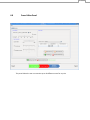
The climate-related factors (meteorology and soil microclimate) are automatically accessed based on
site location and the physical properties of the cover materials. The CALMIM model is intended to be
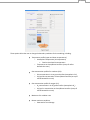
user-friendly with a series of input boxes to enter basic information on the areas and properties of each
daily, intermediate, and final cover material, as well as the % surface area for each cover type with
engineered gas recovery (either vertical wells or horizontal collectors).
Unlike previous inventory models for landfill methane emissions, CALMIM does not rely on a multicomponent first order kinetic, or first order decay (FOD), model for methane generation based on the
annual quantity and composition of landfilled waste. Published literature over the last decade has
indicated that, on a site-specific basis, the previous reliance on first order kinetic models for landfill
methane generation as a predictor for emissions needs to be replaced by an improved, more
scientifically-robust methodology for the following reasons:
The high uncertainty of theoretical first order kinetic models assuming homogeneous
waste and hypothetical decomposition rates in heterogeneous landfill settings (IPCC,
2006);
The complexity of methane pathways at individual sites (recovery, emissions, oxidation,
lateral migration, internal storage) where, especially at sites with high rates of
recovery, modeled generation cannot be related to measured emissions (Spokas et al.,
2006; Bogner and Spokas, 2010).
The need for a methodology which can be field-validated directly for emissions (Note:
previous “validation” of first order kinetic models for inventory purposes was based on
recovery, not emissions (e.g., Van Zanten and Scheepers, 1994; Peer et al., 1993; Scharff
and Jacobs, 2006; Thompson et al., 2009).