1
Approaches to Address Moisture in Pavements
A major objective in pavement design should be to keep the base, subbase, subgrade, and
other susceptible paving materials from becoming saturated or even being exposed to constant
high moisture levels over time. Four approaches commonly employed to control or reduce
moisture problems are listed below:
•
•
•
•
Prevent moisture from entering the pavement system.
Use materials that are insensitive to the effects of moisture.
Incorporate design features to minimize moisture damage.
Quickly remove moisture that enters the pavement system.
It is important to recognize that no single approach can completely negate the effects of
moisture on the pavement system under heavy traffic loading over many years. Thus, it is often
necessary to employ all approaches in combination, particularly for heavy traffic loading
conditions.
Basic Subsurface Drainage Terminology
This section introduces some of the subdrainage components referred to throughout this
chapter, along with short discussions of their functions and salient characteristics. Detailed
design considerations are addressed later in this chapter.
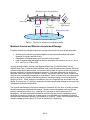
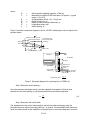
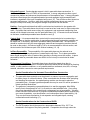
Permeable Base:
An open-graded drainage layer with a minimum laboratory permeability
value of 1000 ft/day. This layer could be asphalt-treated, cement-treated,
or untreated, depending on structural requirements. The primary function
of this layer is to collect water infiltrating the pavement and to move it to
the edgedrains within an acceptable timeframe. The aggregate used for
the permeable base should be crushed (with at least two mechanically
fractured faces) and wear resistant. Asphalt-treated drainage layers must
be treated with a stiff AC binder to prevent draindown. Additional
specifications on treated open-graded materials can be found in PART I,
Chapter 2 of the Guide. Guide specifications are also available through
the FHWA.
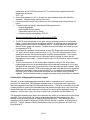
Separator Layer:
An impermeable layer of aggregate material (treated or untreated) or
geotextile or a combination thereof placed between the permeable base
and the subgrade. The separator layer has three main functions: (a) to
maintain separation between permeable base and subgrade and prevent
them from intermixing, (b) to form an impermeable barrier that deflects
water from the permeable base horizontally toward the pavement edge,
and (c) to support construction traffic.
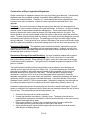
Edgedrains:
Longitudinal pipes that run along the pavement length. They are placed 2
inches from the bottom of a trench dug on the side of the pavement
adjacent to the lane–shoulder joint. They collect water discharged from
the pavement structure and transfer it to the outlets. Pipe edgedrains and
prefabricated geocomposite edgedrains (PGEDs) are the two types of
commonly available edgedrains. Smooth-walled pipes having adequate
strength to withstand loads placed on them are recommended for use as
pipe edgedrains. Pipes should conform to the appropriate State or
AASHTO specification.
SS-5