1
Design
Zenith’s B-9000 Series precision metering pumps utilize a rotary external spur
gear which dispenses an exact volume
of fluid per shaft revolution (cc/rev).
Precision ground and lapped construction, including alignment dowels,
allows for close control of operating
clearances. This ensures precise,
pulseless and repeatable flow under
varying process conditions.
Integrated closed loop speed control and a compact motor driver system
maintains up to .01% accuracy of set
point speeds and also accepts automated interfaces.
The B-9000 Series is constructed of
400 series stainless steel, providing
excellent bearing qualities (hardness 54
Rc) and corrosion resistance for most
chemical processes. The pump offers
increased uptime while minimizing maintenance due to its simple design of only
three moving parts.
The B-9000 Series is a new generation of Zenith’s traditional B-Series pump.
While maintaining precise flow characteristics, its optimum gear design
reduces bearing loads, while increasing
speed capability. The pump allows
direct piping and shaft engagement and
includes a single mechanical shaft seal,
(other seal types available).
Operation
Fluid enters the pump through the inlet
port located in the front plate and fills
the gear pocket. As the gears rotate, a
precise amount of fluid is trapped by the
side walls of the gear pockets and gear
teeth.
The metered fluid is transported by
the rotation of the gears to the discharge
side of the pump where the gear teeth
come into mesh. This action forces the
fluid out of the gear teeth and through
the outlet port located in the front plate.
The pressure developed is determined
by the pump size, the gear clearances,
pump speed, fluid viscosity and impedance to flow.
Pump speed is limited by practical
considerations. If a high viscosity fluid is
being metered and pump speed is
increased beyond a certain point, the
fluid may not be able to fill the gear
teeth spaces, and the pump will not
obtain enough fluid to maintain normal
volumetric efficiency. Lack of sufficient
fluid is called starvation or cavitation.
This can be remedied by increasing the
inlet pressure or reducing pump speed.
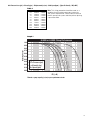
See table 1 on page 5.
Metering of thin fluids requires a
different approach. Since the pump
depends upon the metered fluid for
lubrication of internal bearing surfaces,
speeds are normally limited. These
bearing surfaces include the bearing
areas in the front and rear plates, and
the driver gear turning about the arbor.
Accelerated wear and even seizure may
be the result of high speeds, especially
if attended by low lubricity or a fluid
containing abrasive particles. In certain
applications, it is recommended to use a
pump of larger capacity operated at a
lower speed. Contact our Applications
Engineering Department for assistance.
Pump efficiency depends on four
basic variables: fluid viscosity, gear
clearances, differential pressure and
pump speed. The less viscous the fluid,
the more likely it is to flow through a
given orifice. In a Zenith pump, this
orifice is the gear clearance. Differential
pressure forces the fluid through this
clearance at a steady rate, regardless
of the pump speed. Thus, the slip is
constant for a given amount of time. The
actual delivery of fluid is the measured
delivery minus the slip. If we increase
the pump speed we increase the measured delivery, while the slip remains
constant, causing the pump to become
more efficient. Likewise, if we slow the
pump down, the pump becomes less
efficient. Slip is repeatable and predictable, and pump operation can be
adjusted to compensate and, thus,
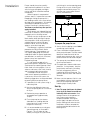
accuracy is very high. See Graph 1 on
page 5.
Zenith B-9000 Series pumps are
designed for operating temperatures
less than 645°F. When operating at
temperatures above ambient, heat
jackets should be used, and pumps
should be heated slowly and uniformly
to avoid warpage and internal component
interference.
The 400-Series stainless steels used
in the construction of the B-9000 Series
pumps provide sufficient corrosion
resistance for most standard chemical
processes. The material hardness will
provide a high degree of wear resistance
as well. However, processes involving
corrosive or abrasive fluids should
always be reviewed by Zenith.
3