1
F
ROM THE BENCH
Reprinted by permission. For subscription information, call 1.800.269.6301, or visit
www.circuitcellar.com/subscriptions. Entire contents copyright ©2012 Circuit Cellar
Inc. All rights reserved.
by Jeff Bachiochi (USA)
SNAP to It (Part 1)
Mesh Networking Simplified
Mesh networking relies on nodes to capture, distribute, and reproduce data. It is
the glue that keeps the Internet and cellular towers connected. While there are
many standard protocols available for localized networks (e.g., Wi-Fi, Bluetooth,
or wireless USB), this article focuses on the SNAP network operating system
created by Synapse Wireless.
April 2012 – Issue 261
T
68
he telephone has all but eliminated letter
writing, the long-time de facto standard
for keeping in touch with friends and families.
Today, not only has this convenience gone wireless, but it is being used for far more than staying in contact with one another. Parents arm
their kids with cell phones for peace of mind.
Kids have a texting agility that is inherited
from their video gaming skills. It’s a sad commentary that there are far fewer “minutes”
devoted to cell conversations than the senseless
plethora of audio and video candy available.
When our Boy scout troop goes camping, we
encourage the boys to leave all of their electronics at home. When traveling any distance, we
use walkie-talkies for communication between
vehicles, even though the adults have cell
phones. The boys share a responsibility to keep
tabs on every vehicle in the group and make
sure no one takes an unexpected turn. (It
amazes me how each GPS will calculate certain
routes differently.) This convoy-style string can
sometimes exceed the distance of a walkietalkie, making the middle vehicles the only
link between the front runner and the rear
sweeper. Communication must be relayed
(repeated) by one radio that has contact with
those ahead and behind. The number of repeats
or hops is related to how much the vehicles are
spread out and the range of the radios.
So it is with low-power communications.
Since transmission distance is a function of
power output, low-power radios have a rather
limited range. This can be a good thing if you
wish to limit the interference you cause. It can
be a bad thing if you need to span a considerable distance within a group of radios. When a
radio must not only transmit and receive its
own data, but also relay the data of others, it is
being used as part of a mesh network. As one
may expect, the strategies for this may be as
simple as every radio repeating what it has
heard, or as sophisticated as dynamic mapping
of the most efficient route. The simplest strategies can create a throughput clogging uproar of
activity as each receives and retransmits the
same message. So, at least a little bit of smarts
are required to cut this to an acceptable level.
MESH NETWORKS
You can think of the Internet as the world’s
largest wired mesh network. Information travels from one router (repeater/director) to the
next until it reaches its destination. Your IP
a)
b)
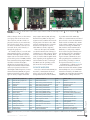
Photo 1—SNAP engine modules are available with an
integrated antenna (a) and an RP-SMA connector for
using an external antenna (b)
CIRCUIT CELLAR®
•
www.circuitcellar.com