1
3. Demands for a Digital Meteorscatter Mode
The very short pings and their occurance at random prohibit from using an explicit change-over.
Therefore a fixed timing is used aligned at full minutes of UTC. Usual half-periods are 30 s
(FSK441) or 60 s (HSCW). PSK2k supports 30 s, 15 s, and 2.5 s. 15 s is good in effective
showers. 2.5 s can be used when accurate time synchronization is guaranteed, and if long bursts
occur frequently. In order to minimize QRM, the calling frequency 144.370 MHz is fixed to 30 s.
The information communicated via a meteor scatter ping is small, and often the interpretation is
ambiguous. Therefore, it is convenient to follow a generally accepted standard QSO-procedure.
There are two standard procedures in use:
European Standard Procedure
CQ AAAAA
AAAAA BBBBB 27
BBBBB AAAAA R27
AAAAA BBBBB RRR
BBBBB AAAAA 73
North-American Standard Procedure
CQ AAAAA
AAAAA BBBBB
BBBBB AAAAA 27
AAAAA BBBBB R27
BBBBB AAAAA RRR
AAAAA BBBBB 73
The report 27 varies, and in FSK441 it usually is repeated two times. The same is true with the RRR
and the 73. If the QSO is established then one of the callsigns may be omitted.
4. Properties of the PSK2k Mode
4.1. Modulation
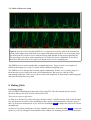
PSK2k uses binary Phase-Shift-Keying at a rate of 2000 bits/s. The pulse shape is a sinc-function.
The result is a minimum-energy modulation, not a constant-amplitude modulation.
4.2. Signal Spectrum
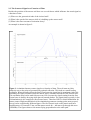
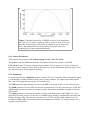
As a consequence of the sinc-pulse, the spectrum of the transmitted signal has a rectangular shape
of 2000 Hz width.
4.3. Code Words
Every code word of PSK2k has 258 bits. Since the Baudrate is 2000 bits/s a code word is
transmitted in 129 ms. Identical code words are transmitted continuously.
4.4. Synchronization
Every sixth bit of a code word (bits 1, 7, 13, 19, ... , 247, 253) belongs to a synchronization pattern
The synchronization pattern is a Hadamard code of 43 bits:
0100101001110111110001011100000100011010110.
Another part of the packet is the binary address. There are two types of addresses:
The general address used for all transmissions addressed to everybody, i.e. CQ calls, QRZ calls,
and QSTs. The general address has the binary pattern
1101010000001111100110011011011011011011011011011.