1
c
⃝STFC
Section 6.1
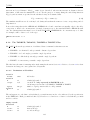
case. Where numerical values are to be supplied specifying 0 or a negative numbers indicates
that DL POLY 4 will resort to the default value. The possible options are:
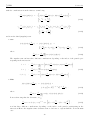
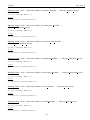
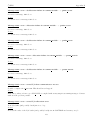
• io read mpiio|direct|netcdf [j [k [l [e]]]]
j specifies the number of processors that shall access the disk. k specifies the maximum
number of particles that the reading processors shall deal with at any one time. Large values
give good performance, but may results in an unacceptable memory overhead. l specifies the
maximum number of particles that the reading processors shall read from the disk in one
I/O transaction. Large values give good performance, but may results in an unacceptable
memory overhead. e accepts Y es only to switch global error checking performed by the I/O
subsystem, the default is N o.
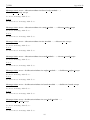
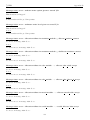
• io read master [l]
l specifies the maximum number of particles that the reading process shall read from the
disk in one I/O transaction. Large values give good performance, but may results in an
unacceptable memory overhead.
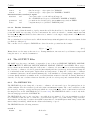
(b) io write method [rp] type [options]
With action set to write the io command controls how the writing of large files is performed.
method controls how the disk is accessed. Possible values are mpiio, in which case MPI-I/O is
used, direct, which uses parallel FORTRAN direct access files, and master which performs all
I/O through a master processor, or netcdf for netCDF I/O provided DL POLY 4 is compiled
in a netCDF-enabled mode. mpiio is the recommended method, and for large systems master
should be avoided and also THE DIRECT OPTION IS NOT STRICTLY PORTABLE, and so
may cause problems on some machines. rp is an optional specification, only applicable to netcdf
method for opting the binary precision for real numbers. It only takes 32bit or amber for 32-bit
(float) precision, otherwise 64-bit (double) precision is defaulted. type controls the ordering of
the particles on output. Possible values are sorted and unsorted. sorted ensures that the ordering
of the particles the default - sequential, ascending. Whereas unsorted uses the natural internal
ordering of DL POLY 4 which changes during the simulation. The recommended and default
value is sorted. If none is specified DL POLY 4 defaultes to the sorted type of I/O. It should
be noted that the overhead of the sorted otion compared to the unsorted is usually very small.
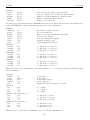
Available options depend on which method is to be used, and all are optional in each case. Where
numerical values are to be supplied specifying 0 or a negative numbers indicates that DL POLY 4
will resort to the default value. The possible options are:
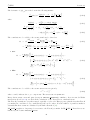
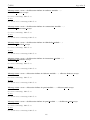
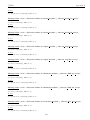
• io write mpiio|direct|netcdf [rp] sort|unsort [j [k [l [e]]]]
j specifies the number of processors that shall access the disk. k specifies the maximum
number of particles that the writing processors shall deal with at any one time. Large values
give good performance, but may results in an unacceptable memory overhead. l specifies
the maximum number of particles that the writing processors shall write to the disk in one
I/O transaction. Large values give good performance, but may results in an unacceptable
memory overhead. e accepts Y es only to switch global error checking performed by the I/O
subsystem, the default is N o.
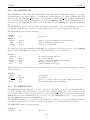
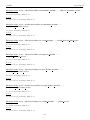
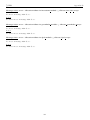
• io write master sort|unsort [l]
l specifies the maximum number of particles that the writing process shall write to the disk in
one I/O transaction. Large values give good performance, but may results in an unacceptable
memory overhead.
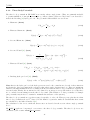
26. The no vom option will trigger a default bypass of the getvom routine which will return zero and
thus no COM removal will happen. Note that this will lead to COM momentum accumulation
for many though not all ensembles!. Such accumulation will propagate to the generation of flow
in the MD cell and ultimately suppress the thermal motion of the particles in the system, leading to
the so called ”frozen ice cube effect”! It is worth nothing that this option must be turned on for the
correct application of stochastic dynamics via the langevin temperature control (NVT Langevin)! If
141