1
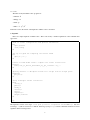
• The decomposition of the potential part of the atomistic stress tensor is given by evaluating the irrotational and
the solenoidal parts, and outputting them to files with a suffixes _i.str and _s.str respectively, e.g. the irrotational and solenoidal parts of the Hardy stress can be found in the files hardy_i.str and hardy_s.str
respectively.
For example, the solenoidal part of the first Piola–Kirchhoff–Hardy stress tensor will be output to a file named
hardy_s_pk1.str.
All str output files consist of 12 columns and a number of rows equal to the number of grid points for either
evaulating the cauchy or 1st pk stress. The first three columns are the coordinates of the grid points, and the next nine
columns are the components of the stress tensor in the following order: 11, 21, 31, 12, 22, 32, 13, 23, 33.
4. Examples
The following two examples are included with the MDStressLab code.
4.1. Uniaxial strain
An example of a silicon under uniaxial strain is provided with the MDStressLab code. In this example, various
stress measures are computed for a strained single crystal cube of silicon in the diamond cubic crystal structure such
that the x, y and z axis are oriented along the [100], [010], and [001] crystallographic directions. The system is
deformed with a strain of 1% in the y direction, and zero strain in the x and z directions. In addition, the decomposition
of stress into an irrotational part and a solenoidal part is performed. The system is studied under zero temperature.
The intial and final configurations are obtained using LAMMPS (Plimpton, 1995) in the form of two .dump files.
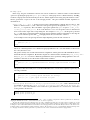
The LAMMPS input script in.uniaxialstrain to generate the .dump files is included with this example. Using LAMMPS, the reference configuration of the cube is obtained by stacking 10 × 10 × 10 unit cells with a lattice
parameter a0 = 5.430950Å under flexible periodic boundary conditions. The interatomic potential is a three-body
Stillinger–Weber potential archived in OpenKIM (Singh (2016); Wen (2016); Elliott and Tadmor (2011)). The reference and deformed configurations are generated in the files dump.initial.0 and dump.final.1, respectively. These files
are converted to the MDStressLab configuration file format (see Section 2.1) using the executable script dump2str
included in the utils/ directory. This example is contained in the directory examples/Uniaxial_strain,
which contains the following files:
• README: Contains instructions for how to run the example.
• in.uniaxialstrain: The LAMMPS input script file used to generate the reference and deformed configuration dump files.
• dump.initial.0: A LAMMPS generated .dump configuration file that contains the positions of atoms
corresponding to the reference configuration.
• dump.final.1: A LAMMPS generated .dump configuration file that contains the positions of atoms corresponding to the deformed configuration.
• species.data: Contains the mass of the atomic species involved. See Section 2.1 for more information.
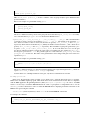
• testrun.in: The input file to MDStressLab setting up the problem and defining what needs to be computed.
Note that since the .dump files are included in the directory, the user does not need to have LAMMPS installed
to generate them.
Warning: the cfg files use scaled coordinates which will generate huge numerical errors during MDStressLab
calculation. We strongly recommand using unscaled/exact coordinates to perform the computation.
9