1
3
SAFETY CARBON DIOXIDE ( R744)
Carbon dioxide is colourless – odourless gas or cryogenic liquid. The AS1677 Refrigeration standard classifies
R744 CO2 as a A1 group refrigerant.
At low concentrations the gas is odourless: @ higher concentrations it has a sharp acidic odour. Carbon dioxide
is a powerful cerebral dilator: It is also an asphyxiate and an irritant. The effects and there concentrations of CO2
refrigerant are listed below in Table 1.
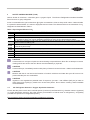
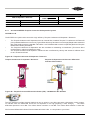
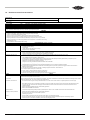
Table 1 Physiological Effects of CO2
PPM
EFFECTS ON HEALTH
350
Normal value in atmosphere
1,000
Recommended not to be exceeded for human comfort
Threshold Limit Value (TLV) - Time Weighted Average (TWA)
Concentration to which one may be repeatedly exposed for 8 hours per day without adverse effects
Can affect the respiration function and case exitation followed by depression of the central nervous system plus
a 50% increase in breathing rate
100% increase in breathing rate after Short Term Exposure Limit (STEL) 15 minutes TWA exposure should not
exceed at any time of day
5,000
20,000
30,000
40,000
50,000
Immediately Dangerous to Life or Health (IDLH) maximum level
100,000 Lowest lethal concentration. Few minutes exposure produces unconsciousness
200,000 Death accidents have been reported
300,000 Quickly results in unconsciousness and convulsions
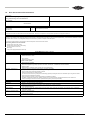
CAUTION!
Contact with CO2 cold gas or liquid can cause freezing to exposed tissue, Note: Do not attempt to remove
clothing which has stuck to the skin. Burns must be treated by a physician.
CAUTION!
Contact with eyes, immediately wash out with plenty of water for several minutes – Obtain medical attention.
CAUTION!
Moisture with the air can lead to the formation of carbonic acid that can irritate the eyes. All forms of CO2
(carbon dioxide) are non-combustible.
CAUTION!
Ingestion is not regarded as potential route of exposure, give 200 – 300 millilitres (half pint) of water to
drink. Never give anything by mouth to an unconscious person. Do not induce vomiting. Seek immediate
medical attention.
3.1
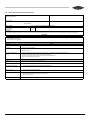
CO2 Refrigerant detection / Oxygen deprivation detectors:
Ensure that the plant room/s other confined spaces (Coolrooms) are fitted with CO2 detection sensors (systems)
or oxygen deprivation sensor/s. Also refer AS1677 [Accumulation of heavier than air refrigerants.] and [Safety
provisions for personnel in refrigerated spaces.]
Ensure that the plant room has adequate ventilation at all times.
BAO-103-1 AUS
3