1
15 Virtual Router Redundancy Protocol
This chapter covers the following topics:
• Overview on page 261
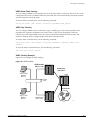
• Determining the VRRP Master on page 262
• Additional VRRP Highlights on page 265
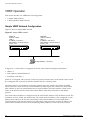
• VRRP Operation on page 266
• VRRP Configuration Parameters on page 268
• VRRP Examples on page 269
This chapter assumes that you are already familiar with the Virtual Router Redundancy Protocol
(VRRP). If not, refer to the following publications for additional information:
• RFC 2338 — Virtual Router Redundancy Protocol (VRRP)
• RFC 2787 — Definitions of Managed Objects for the Virtual Router Redundancy Protocol
Overview
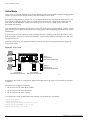
Like ESRP, VRRP is a protocol that allows multiple switches to provide redundant routing services to
users. VRRP is used to eliminate the single point of failure associated with manually configuring a
default gateway address on each host in a network. Without using VRRP, if the configured default
gateway fails, you must reconfigure each host on the network to use a different router as the default
gateway. VRRP provides a redundant path for the hosts. If the default gateway fails, the backup router
assumes forwarding responsibilities.
VRRP Terms
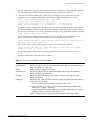
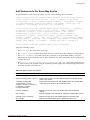
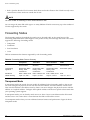
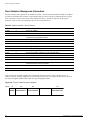
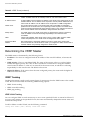
Table 45 describes terms associated with VRRP.
Table 45: VRRP Terms
Term
Description
virtual router
A VRRP router is a group of one or more physical devices that acts as the default
gateway for hosts on the network. The virtual router is identified by a virtual router
identifier (VRID) and an IP address.
ExtremeWare 6.2.2 Software User Guide
261