1
2945b.qxd
27/Apr/2005
13:32
Page 2
full span and also has a fully adjustable reference level. Speed is comparable with analog analyzers, allowing real time adjustments over the
displayed dynamic range. With the tracking generator provided as
standard, duplexers and filters can be aligned quickly and easily. An
offset facility provides testing of equipment with frequency translation. Channel stepping can be performed by defining an increment
and then using the FREQ ×Ø keys. This is particularly useful when
testing multi-channel systems.
Remote Control - RS-232 or GPIB
Remote control is provided with an RS-232 interface as standard. An
IEEE-488.2 interface (Option 5) can be fitted where other instruments are required to operate in a system with the 2945B.
Printing and Post Analysis
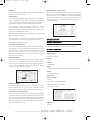
Live Look and Listen
This feature puts the 2945B above all its peers with the ability to
examine signals on the screen and demodulate them simultaneously.
Intermittent interference can be isolated quickly and the signals then
easily identified. The trace can be saved to the memory card along
with the time and date, providing factual evidence that can be recalled
later. This feature is particularly useful when looking for rogue transmissions, especially on busy basestation sites.
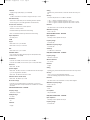
With the parallel printer port interface, screen dumps, automatic test
results or previously stored results may be sent to any parallel printer.
These facilities are available as standard using the serial RS-232
interface.
A screen capture facility is available so any screen displayed on the
2945B Communications Service Monitor can be saved direct to a PC,
via the serial port, as a bit map file.
A single trace dump command allows fast transfer of the spectrum
analyzer, OBW or transient analysis trace to be transferred as 249
ordinate values for detailed post-proccessing and analysis.
From 2 µV to 150 Watts
Autorun - internal control
The 2945B will measure the power of low level signals such as those
encountered when monitoring off-air signals or those found when
probing a circuit. 150 Watts measurement is provided without the
need for external attenuators, so high power base stations can be
measured directly. Measurement accuracy of better than 10% is
guaranteed all the way down to 5 mW on the N-Type connector, allowing radios to be qualified at low power levels.
With the (optional) Analog Systems Card fitted, automatic testing
without an external controller is possible. Custom tests may be written and run by the operator. Four programmable relay contacts are
provided with the optional parallel printer interface to allow remote
control of radios or test fixtures from built-in automatic tests.
Accurate RF Signals
The signal generator provides coverage from 400 kHz to 1.05 GHz
with +5 dBm output (+7 dBm overrange) and fast switching speed.
Level accuracy is ±2 dB at all levels above -127 dBm.
Custom Programs
Users may program the instrument to suit their own specific needs.
This is possible either by configuring any of the four built-in programs or by using the MI-BASIC interpreter to produce a customized
test program that can be executed internally, without an external controller.
Duplex - provided as standard
Full duplex operation is provided by the 2945B. This allows testing of
duplex radios as well as simultaneous testing of repeater transmit and
receive paths. There are no restrictions to the duplex offset.
PMR, Trunking and Cellular
The 2945 provides extensive support for the various tone signaling
systems used in Professional Mobile Communications such as
DTMF, TONE REMOTE (Option), DCS and CTCSS. Also a highly
flexible user defined system enables the instrument to be configured
to accommodate a wide variety of other tone formats that are in use.
Additionally trunked networks are supported with network signaling
protocol simulations for MPT-1327/1343, LTR (available Oct 05) and
EDACS radio / repeater measurements. Legacy analog cellular standards are also available internally and include AMPS, TACS and
NMT with all country variants provided.
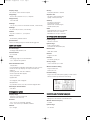
Memory Card - with real time clock
The Memory Card Drive meets the PCMCIA standard format for PC
cards. The 2945B provides a DOS based filing system that allows
transfer of information to a PC fitted with a memory card slot.
Test setups, test results, screen dumps, spectrum analyzer
coordinates and test sequences can all be stored on the memory card,
allowing information to be easily stored and retrieved when required.