1
In concurrent approaches, data patterns from normal computation serve as test patterns, and built-in
monitoring circuits detect faults. Thus testing and
normal computation can proceed concurrently. Parity checking is the most common form of concurrent
testing.2
In explicit approaches, special input patterns serve
as tests; hence normal computation and testing occur
at different times. Explicit tests can be applied by
test equipment external to the UUT (external testing)
or they can be applied internally (self-testing). Even if
concurrent testing is used for system maintenance,
explicit testing is necessary for manufacture and
system assembly. Specific test pattern generation
procedures are required. The test patterns are produced either manually, by a design or test engineer,
or automatically, by special hardware- or softwareimplemented algorithms called test generation programs. Manual test generation is widely used. The
set of test patterns with the correct responses is
called a fault dictionary. Testing based on storing
such test data is called stored response testing.
The cost of storing test pattern responses can be
reduced by using a technique called comparison testing. Note that it may still be necessary to store the
test patterns themselves. Comparison testing makes
use of several copies of the UUT, each processing the
same input signals; faults are detected by comparing
the responses of all the units. A response differing
from that of a known fault-free unit pinpoints a faulty
unit. This technique can be implemented with as few
as two copies of the UUT, one of which-the so-called
gold unit-acts as a reference against which the
other is compared.
Stored response testing may be contrasted with
algorithmic testing, in which the test data is computed each time the UUT is tested. The algorithmic
approach requires some rapid, and therefore simple,
method for determining test data. A common test
pattern source is a high-speed (hardware or software)
counter that generates sequencesof test patterns in a
fixed or pseudo-random order.
Another way of obtaining the good response Ro is
for the test pattern generator to compute it. This approach is well-suited to testing microprocessors, because many of the functions to be tested are defined
by algorithms programmed into the UUT.
High-speed test generators, particularly algorithmic testers, can produce huge amounts of response data whose analysis and storage can be quite
difficult. Compact testing methods attempt to compress the response data R into a more compact form
f(R), from which the UUT fault status information in
R can be derived. The compression function f can be
implemented with simple circuitry. Thus, compact
testing entails little test equipment and is especially
suited for field maintenance.
A compact testing method called transition counting computes the number of logical transitions (a 0
changing to a 1 and vice versa) occurring in the output response at the test point. Transition counting
has been implemented in a number of -commercial
testers and appears to provide acceptable fault
18
coverage.3-5 It has the advantage of being insensitive
to normal fluctuations in signal duration and so is
especially useful for testing asynchronous circuits.
Similar compact testing schemes, such as l's counting, have also been proposed.6'7
Recently, Hewlett-Packard Corporation proposed
a compact testing scheme called signature analysis,
intended for testing microprocessor-based systems.8'9
The output response is passed through a 16-bit linear
feedback shift register whose contents f(R) (after all
the test patterns have been applied) are called the
(fault) signature; f(R) is recorded or displayed as a
four-digit hexadecimal number.
Faults and tests
Every testing procedure diagnoses a particular
class of faults, -although in practice these faults are
not always well-defined. An explicit fault model is
necessary, however, if the fault coverage of a set of
tests is to be determined.
Functional faults. The UUT can be regarded as an
n-input, m-output, s-state finite-state machine-an
(n,m,s,)-machine for short. The functional fault
model, perhaps the m-ost general of the useful fault
models, allows an (n,m,s)-machine to be changed by a
fault to an (n, m,s ')-machine, where s 'does not exceed
s. Under this model a combinational circuit, which is
an (n, m, 1)-machine, always remains combinational
when faults are present. To test a combinational circuit M for all functional faults, it is necessary and sufficient to apply all 2n possible input patterns to M. In
effect, this exhaustively verifies M's truth table and
thereby provides complete fault coverage. Although
this approach requires a large number of tests, it can
easily and rapidly generate them. This type of testing
can sometimes be applied to the combinational subcircuits of a sequential UUT. When the circuit under
test must be treated as sequential (s> 1), complete
detection of functional faults requires a special type
of test called a checking sequence. The theory of
checking sequences is well-developed,10'11 but unless
s is very small, checking sequences are extremely
long and difficult to generate. We now illustrate an
application of the functional fault model to a specific
class of microprocessors.
Testing a simple bit-sliced microprocessor. 12 A bitsliced microprocessor is an array of n identical ICs
called slices, each of which is a simple processor for
operands of length k bits, where k is typically 2 or 4.
The interconnections between the n slices- are such
that the entire array forms a processor for nk-bit
operands. The simplicity of the individual processors
and the regularity of the array interconnections make
it feasible to use systematic methods for fault analysis and test generation. Unfortunately, the more
widely used non-bit-sliced microprocessors do not
share these properties.
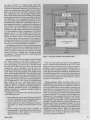
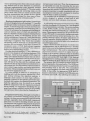
Figure 1 shows a circuit model for a 1-bit processor
slice which has most of the features of a commercial
device such as the Am2901.'3 (The main omission is
COMPUTER