1
#$K
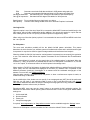
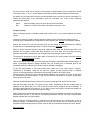
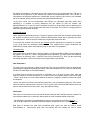
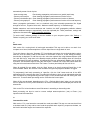
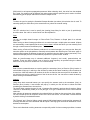
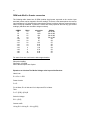
DBW and dBuV to S-meter conversion
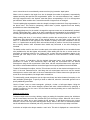
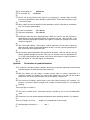
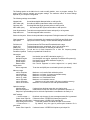
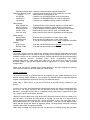
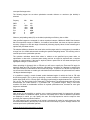
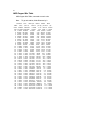
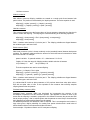
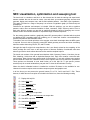
The following table shows how S DBW (median signal power expected at the receiver input
terminals) values can be mapped to S meter readings. There are a few assumptions: the receiver
input impedance is 50 Ohms and the transmission lineloss is minimal. Also we assume that the S
meter is correctly calibrated. In practice, S meters are mostly imprecise and can only give relative
readings. (dB values are rounded to integer numbers)
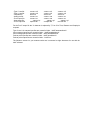
S DBW
-64
-73
-83
-93
-103
-109
-115
-121
-127
-133
-139
-145
-150
DBuV
74
65
55
44
34
28
22
16
10
4
-2
-8
-14
microvolts
4050
1350
450
150
50
25
12.5
6.25
3.13
1.56
0.78
0.39
0.20
S Meter
S9+40 dB
S9+30 dB
S9+20 dB
S9+10 dB
S9
S8
S7
S6
S5
S4
S3
S2
S1
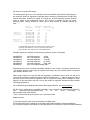
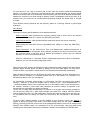
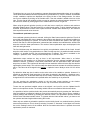
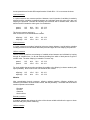
For ease-of-use one could use the below approximation:
S9 equals 34 dBuV
S9 equals –103 DBW
each 6 dB less equals one S-point
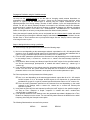
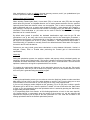
Equations to Calculate The Median Voltage at the Input of the Receiver
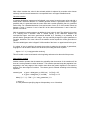
Ohm's Law:
E = I*R or I = E/R
Power formula:
P = EI
P is in Watts, E is in Volts and I is in Amps and R is in Ohms.
Then:
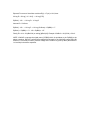
P = E * [E/R] = (E^2)/R
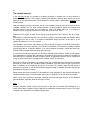
Solve for Voltage:
E^2 = [P*R]
Convert to dB:
10 Log E^2 = 20 Log E = 10 Log [P*R]