1
d1
d2
if (p)
q = 1;
else
q = 2;
r = q;
d3
B2 q = 1; x2
void store(int i)
{
...
}
d5
B4 r = q; x4
B1 i = 10;
store(i);
x2
B2 n = 2*i;
store(n);
(ii) CFG
d2
CFG of
store()
d3
f2
(i) Code
d6
(i) Code
x1
f1
B3 q = 2; x3
d4
d1
i = 10;
store(i);
n = 2*i;
store(n);
B1 if (p) x1
(ii) CFG
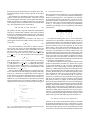
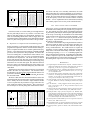
Fig. 4: An example showing how function calls are represented.
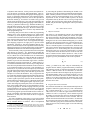
Fig. 2: An example of the if-then-else statement and its CFG.
this information is represented by:
=
x2
x3
x4
=
=
d2 = d4
d3 = d5
d4 + d5 = d6
(3)
(4)
(5)
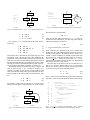
Fig. 3 shows a while-loop statement and its CFG. The constraints are:
x1
x2
x3
x4
=
=
=
=
d1 = d2
d2 + d4 = d3 + d5
d3 = d4
d5 = d6
(6)
(7)
(8)
(9)
Note that the above constraints do not contain any loop count
information. This is because the loop count information depends on the values of the variables, which are not tracked in the
CFG. However, the loops can be detected and marked. After all
the structural constraints have been constructed, the user will be
asked to provide the loop bound information as part of specifying the program functionality constraints (see Section C).
The function calls are represented by using f -edges in the
CFG as shown in Fig. 4. An f -variable is similar to a dvariable, except that its edge contains a pointer pointing to the
CFG of the function being called. The construction of structural constraints in the caller function remains the same. They
are:
x1
x2
=
=
d1 = f 1
f1 = f2
(10)
(11)
The number of times that the function is executed can be
tracked by knowing the f -edges pointing to it. In our example,
d1
B1 q = p; x1
/* p >= 0 */
q = p;
while(q<10)
q++;
r = q;
d2
d4
B2 while(q<10) x2
d3
d5
B3 q++; x3
B4 r = q; x4
d6
(i) Code
(ii) CFG
Fig. 3: An example of the while-loop statement and its CFG.
d2 = f 1 + f 2
(12)
where d2 is the first edge of the function store()’s CFG. For
the main function, which has d1 as its first edge in the CFG, the
following constraint is constructed.
d1 = 1
(13)
C Program Functionality Constraints
These constraints are provided by the user to denote loop
bounds and other path information that depend on the functionality of the program. We illustrate the use of these constraints to capture conditions on feasible program paths with
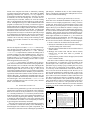
the example (Fig. 5) taken from Park’s thesis [4]. The function check data() checks the values of the data[] array.
If any of them is less than zero, the function will stop checking
and return 0, otherwise it will return 1.
The while-loop in the function will be executed between 1
and DATASIZE times. Suppose that DATASIZE is previously
defined as a constant value 10, then the following constraints
are used to specify this loop bound information.
1x1
x2
x2
10x1
(14)
(15)
Here, x1 is the count for the basic block just before entering the
loop and x2 is the count for the first basic block inside the loop.
1:
2:
3:
4:
5:
6:
7:
8:
9:
10:
11:
12:
13:
14:
15:
16:
check_data()
{ int i, morecheck, wrongone;
x1
morecheck = 1; i = 0; wrongone = -1;
while (morecheck) {
if (data[i] < 0) {
wrongone = i; morecheck = 0;
}
else
if (++i >= DATASIZE)
morecheck = 0;
}
x2
x3
x4
x5
x6
x7
x8
if (wrongone >= 0)
return 0;
else
return 1;
x9
}
Fig. 5: check data example from Park’s thesis. The xi variables
denote the execution counts of their corresponding basic blocks.