1
Chapter 1: Xilinx Blockset
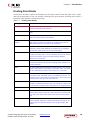
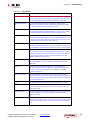
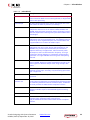
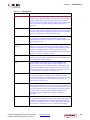
Reed-Solomon Encoder 9.0
This block is listed in the following Xilinx Blockset libraries: AXI4, Communications and Index.
The Reed-Solomon (RS) codes are block-based error correcting
codes with a wide range of applications in digital communications
and storage. This block adheres to the AMBA® AXI4-Stream
standard.
They are used to correct errors in many systems such as digital
storage devices, wireless or mobile communications, and
digital video broadcasting.
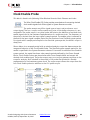
The Reed-Solomon encoder augments data blocks with
redundant symbols so that errors introduced during
transmission can be corrected. Errors can occur for a number of reasons (noise or
interference, scratches on a CD, etc.). The Reed-Solomon decoder attempts to correct errors
and recover the original data. The number and type of errors that can be corrected depends
on the characteristics of the code.
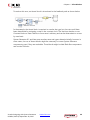
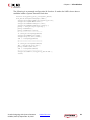
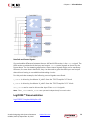
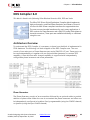
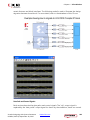
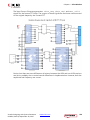
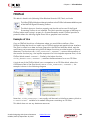
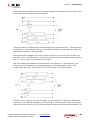
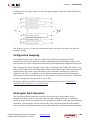
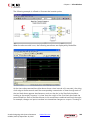
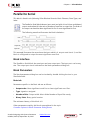
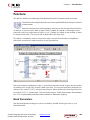
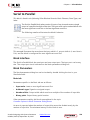
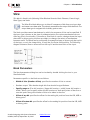
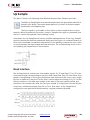
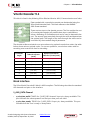
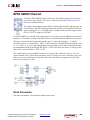
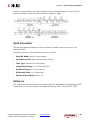
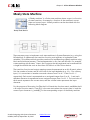
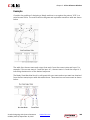
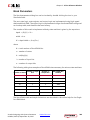
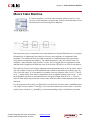
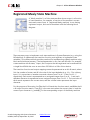
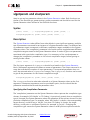
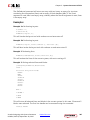
A typical system is shown below:
Reed-Solomon codes are Bose-Chaudhuri-Hocquenghem (BCH) codes, which in turn are
linear block codes. An (n, k) linear block code is a k-dimensional sub space of an
n-dimensional vector space over a finite field. Elements of the field are called symbols. For
a Reed-Solomon code, n ordinarily is 2S -1, where s is the width in bits of each symbol.
When the code is shortened, n is smaller. The encoder handles both full length and
shortened codes.
The encoder is systematic. This means it constructs code blocks of length n from
information blocks of length k by adjoining n-k parity symbols.
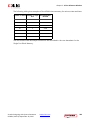
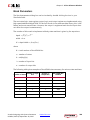
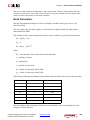
A Reed-Solomon code is characterized by its field and generator polynomials. The field
polynomial is used to construct the symbol field, and the generator polynomial is used to
Vivado: Designing with System Generator
UG958 (v2015.3) September 30, 2015
www.xilinx.com
Send Feedback
261