1
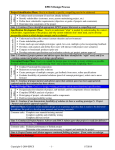
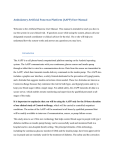
EPICS Design Process
Project Identification
Specification
Development
Redesign
Retirement
Conceptual
Design
Detailed
Design
Service
Maintenance
Production
Definitions of Analysis, Reproduction and Design (Horenstein, 1999)
The following definitions may be helpful in distinguishing between analysis, reproduction, and
design.
Analysis: If only one answer to the problem exists, and finding it involves using
mathematical/computational models or tools, then the activity is probably analysis. Examples of
analysis are simulating the response of a circuit using circuit simulation tools, conducting an
experiment to obtain data, or deriving simple equations of motion to determine expected forces.
Design: If more than one solution exists, and if deciding upon a suitable path, demands
creativity, choice taking, testing, iteration, and evaluation, the activity is most certainly design.
It can include analysis, but it also must involve at least one of these other elements.
Reproduction: Process of recreating something that has already been designed. For example,
copying oscillator circuit from an electronics book and substituting resister values to set the
frequency is an example of reproduction, not design.
Characteristics of Good Design vs. Bad Design (Horenstein, 1999)
Good Design
1. Works all of the time
2.
3.
4.
5.
6.
Bad Design
1. Works initially, but stops working after a
short time
2. Meets only some technical requirements
3. Costs more than it should
4. Requires frequent maintenance
5. Poses a hazard to the user
6. Fulfills a need that is questionable
Meets all technical requirements
Meets cost requirements
Requires little or no maintenance
Is safe
Creates no ethical dilemma
Copyright © 2008 EPICS
-2-
9/14/2008