1
1. Introduction
Biological advice on many commercially exploited stocks in the ICES area relies to a large extent on
commercial catch-at-age. The quality of the biological advice is dependent on the quality of the
underlying data. However, for most stocks there is hardly any insight into measures of uncertainty
associated with the catch-at-age data. Furthermore, for the stocks exploited by various countries, the
sampling and raising procedures to estimate national age-composition of catches might differ from one
country to another. The methods used for combining national catch statistics into international catch at
age are not uniform. The historical disaggregated national catch data are not always accessible, and thus
the consistency of data series is not warranted. Thus the whole procedure of estimating international
catch at age would gain in efficiency and transparency if a uniform method of aggregation was developed
and applied, and if all data used in the estimation were gathered and centralised in one single database.
The objective of this paper is to present a prototype of such a database for the storage and the processing
of ICES Working Group input for fish stock assessment. Input data are total catches by fleet (and
country), area and time period combined with age distribution samples (when available). It was
developed as a part of the EU funded project EMAS (Evaluation of MArket Sampling strategies for a
number of commercially exploited stocks in the North Sea and development of procedures for consistent
data storage and retrieval, CFP Study Project 98/075; Pastoors et al., 2001). This project intended to
evaluate the adequacy of the international market sampling effort for a limited number of commercially
exploited fish stocks in the ICES area, to quantify the uncertainties in estimated catch in numbers and
mean weight at age, to advise on appropriate sampling levels and methods and to define protocols and
develop prototype software to store and aggregate national sampling data.
The data processing uses the available age distribution samples to convert the national catches (landings
and discards) into age compositions, and sums the national data to total stock age composition, which are
the main input to the VPA (Virtual Population Analysis). The processing of data implies filling in gaps in
data, caused by some countries not supplying full sets of input data. The gaps are filled in by
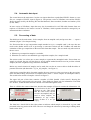
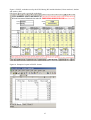
extrapolating samples data to non-sampled catches data (Figure 1).
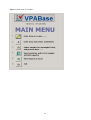
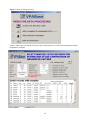
The database is a relational database implemented in ACCESS, chosen for its simplicity of use and
because it is a standard software commonly used in fisheries institutes. Although ACCESS might not be
designed for storing and manipulating large-scale databases, it was considered a suitable tool for the
present application. It allows having a user-friendly interface. Data may be entered through user-forms or
transferred from other databases through a file with a specified exchange format. Reports from the
database are made in EXCEL sheets. A user’s manual is available.
A number of software tools were already developed for data storage and combination of national catch
information to the international level:
(a) In the ICES Herring Assessment Working Group for the Area South of 62° N (HAWG) national
data are submitted on agreed spreadsheet forms. The software called SALLOC is used to raise
national data to the international level (Patterson 1998). This Fortran program provides a log
listing the actual fill-ins used to cover all landings with missing biological information, but this
list is not given in the WG report. Also, no list is available in the WG report giving the
extrapolations made of each national data set before submitting the data to ICES. The Working
Group provides a well-documented overview of the sampling coverage from each country in the
report.
(b) The Working Group on the Assessment of Demersal Stocks in the North Sea and Skagerrak
(WGNSSK) keeps a database system to store and aggregate data on the flatfish species in the
North Sea. The database system (FISHBASE) consists of a user interface programmed in Pascal
and a specific datafile format. Data are stored in separate datafiles by country, gear, area, sex (if
available) and year. Different levels of aggregations may be used in the datafiles ranging from
files, which have catch-numbers, weights at age and lengths at age by quarter, sex, gear, area and
1