1
No Segregation Without Representation
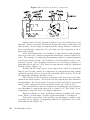
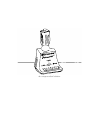
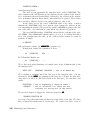
The second way in which levels can interfere with optimal solutions is by encouraging segregation of the levels. A popular design construct called the “object”
typifies this dangerous philosophy.
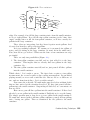
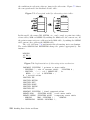
An object is a portion of code that can be invoked by a single name, but
that can perform more than one function. To select a particular function you
have to invoke the object and pass it a parameter or a group of parameters.
You can visualize the parameters as representing a row of buttons you can push
to make the object do what you want.
The benefit of designing an application in terms of objects is that, like
a component, the object hides information from the rest of the application,
making revision easier.
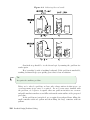
There are several problems, though. First, the object must contain a
complicated decision structure to determine which function it must perform.
This increases object size and decreases performance. A lexicon, on the other
hand, provides all usable functions by name for you to invoke directly.
Second, the object is usually designed to stand alone. It can’t take advantage of tools provided by supporting components. As a result, it tends to
duplicate code inside itself that will appear elsewhere in the application. Some
objects are even required to parse text in order to interpret their parameters.
Each may even use its own syntax. A shameless waste of time and energy!
Finally, because the object is constructed to recognize a finite set of possibilities, it’s difficult to make additions to the row of buttons when a new
function is needed. The tools inside the object have not been designed for
reuse.
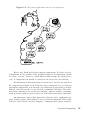
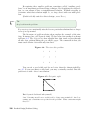
The idea of levels pervades the design of my own personal computer, the
IBM Personal Computer. Besides the processor itself (with its own machine
instruction set, of course), there are these software levels:
• the set of utilities written in assembler and burned into the system’s ROM
• the disk operating system, which invokes the utilities
• the high-level language of choice, which invokes the operating system and
the utilities
• and finally, any application using the language.
The ROM utilities provide the hardware-dependent routines: those that handle the video screen, disk drives, and keyboard. You invoke them by placing
a control code in a certain register and generating the appropriate software
interrupt.
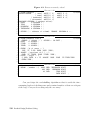
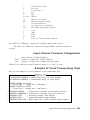
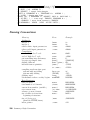
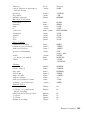
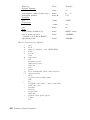
For instance, software interrupt 10H causes entry to the video routines.
There are 16 of these routines. You load register AH with the number of the
video routine you want.
92
Preliminary Design/Decomposition