1
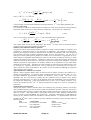
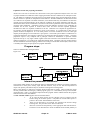
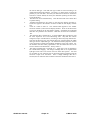
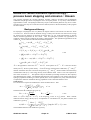
16α 4 c Wz04 g nI ,n ' u(ν ) Bn '→n = / [exp(hν / kTr ) − 1] 4.10.5 3 2 2 3 3πa 0 nn' (n − n' ) I The ADAS library contains subroutines for evaluation of the bound-bound Gaunt factors gn ,n ' . In a similar manner the bound-free rates are obtained. The photo-ionisation rate coefficient from the level n is 8α 4 c Wz04 ∫ u(ν ) Bn→κ dκ = 3 3πa n 5 0 ∞ ∫ I n / kTr g nII,κ dx 4.10.6 x (e x − 1) The stimulated recombination coefficients is πa 02 I H ∫ u(ν ) Bn→κ dκ = 8 kTe 3/ 2 8α 4 c Wz04 3 3 3πa 0 n ∞ exp( I n / kTe ) g nII,κ exp( − Tr x / Te )dx ∫ I n / kTr 4.10.7 x (e x − 1) and the radiative recombination coefficient is α πa 2 I = 8 0 H kTe (r ) n 3/ 2 8α 4 c z 04 3 3 3πa 0 n ∞ exp( I n / kTe ) ∫ 4.10.8 g nII,κ exp( − x )dx x I n / kTe where I n = z0 I H / n , Te is the Maxwellian free electron temperature. The ADAS library contains 2 2 II subroutines for evaluation of the bound-free Gaunt factors gn ,κ . The radiation dilution and radiation temperature are relevant only to hydrogen in astrophysical plasmas. Thus the general dilution factor for the beam case is set to zero. It is useful however to be able to artificially depopulate the ground level of hydrogen so as to isolate the contributions to populations of excited levels of hydrogen coming from recombination alone. This is achieved by having a separate dilution factor applying to photoionisation from the ground level which can be switched on and off. The only requirement here is that this dilution factor and the associated radiation field temperature be large. Pre-set values in ADAS310 are suitable for most purposes. The de-excitation rate for hydrogenic ions by electrons is q (e) n '→ n I 2 8 2 πα ca 02 n' 3 n 5 g n ,n ' I H = 2 2 4 2 3 3 (n' − n ) z 0 kTe 1/ 2 P( ∆E n,n ' / kTe ) 4.10.9 for n' > n and the excitation rate is q (e) n→ n ' I 2 8 2 πα ca 02 n' 5 n 3 g n ,n ' I H = 2 2 4 2 3 3 (n' − n ) z 0 kTe 1/ 2 4.10.10 exp( − ∆E n ,n ' / kT ) P ( ∆E n ,n ' / kTe ) Particularly simple expressions for P are given by Van Regemorter. In general an effective P-factor is deduced from more complex collision cross-section calculations or experimental cross-section measurements. similar formulation may be used for proton collision rates. The electron collisional ionisation rate coefficient may be described by q (e) n→ ε I = 8 πα ca H kTe 2 0 1/ 2 n2 exp( − I n / kTe ) z 02 ∞ 4.10.11 ∫ G exp( −ζ )dζ 0 and the three-body recombination coefficient by ADAS User manual Chap4-10 17 March 2003