1
7.2 HIGH PCU FALL-RATE
General:
The piston will always fall slowly due to a small leak between the piston and cylinder.
fall rate will never be so fast that a stable reading cannot be made.
7.2.1
This
If the system has been pressurized quickly, then sufficient time must be allowed for
the instrument to thermally stabilize. Continue re-floating the piston until the fall
rate stabilizes, this should take no longer than one minute.
7.2.2 If PCU has just been re-fitted after cleaning:
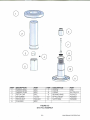
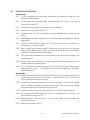
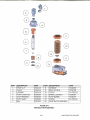
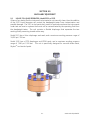
Air pockets can be introduced when re-fitting a PCU. This will cause the piston to
fall faster while the air bleeds between the piston and cylinder.
Continue to re-float the piston until the fall rate slows down. If the piston continues
to fall quickly, then check for fluid leakage around the base of the PCU assembly.
Check for loose/damaged/dirty seal under the PCU, tighten, clean or replace as
necessary (Refer to sections 6.1/6.2/6.3).
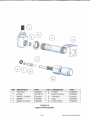
7.2.3 Reservoir valve may be leaking. Observe fluid level, it will rise slowly if the valve is
leaking. This indicates that the valve seat may be damaged or dirty, or the o-ring
below the valve vent may be damaged. It should be disassembled, cleaned and
inspected, then retested or replaced as necessary (Refer to section 6.8).
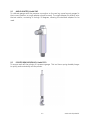
7.2.4 Rambler seal may be leaking. Check lead screw in screw pump for “wetness” when
extended, the screw thread should be greased, not running with operating fluid. If
lead screw is “wet”, then replace rambler seal and anti-extrusion ring. (Refer to
Section 6.5).
7.3
7.4
SYSTEM WILL NOT PRIME
7.3.1
Check reservoir valve is closed.
7.3.2
Check for sufficient fluid in reservoir.
7.3.3
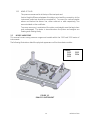
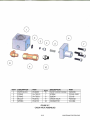
Check for damaged/missing/dirty O-ring on test station.
7.3.4
Check that the face of the DUT is contacting the O-ring, and that the surface is
not scored or dented.
SYSTEM WILL NOT PRESSURIZE
7.4.1
Ensure correct valve operation during priming process.
7.4.2
Check DUT is not leaking.
7.4.3
Clean system externally, check for fluid leak by continually trying to pressurize.
Wherever fluid appears, replace the seal – check sealing faces are clean and
undamaged before re-assembly.
7-2
FAULT FINDING