1
Chapter 1
Introduction
Most of computer systems in use today are embedded in other machinery, such as automobiles, telephones, appliances, and peripherals for computer systems. Tasks requiring
smaller amounts of processing power and memory are generally implemented using microcontrollers (uC). A micro-controller is a small computer on a single integrated circuit
consisting of a CPU combined with program and data memory, peripherals like analog
to digital converters, timer/counters, serial communication ports and general purpose
Input/Output ports. Intel 8051, Atmel AVR, PIC etc. are popular micro controllers
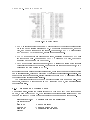
available in the market. To design the MicroHOPE hardware, we have chosen ATmega32
micro-controller from Atmel AVR series, after considering the hardware resources available on it and the support of Free Software tools like GNU assembler and C compiler.
Why microHOPE ?
Many people who write programs that run on a PC nd it dicult to get started on
coding for a microcontroller, mainly due to:
1. Programming a uC requires some knowledge about the target hardware.
2. Transferring the program from the PC to the target device requires some special
hardware and software.
There are plenty of micro-controller development kits in the market, but most of them
focus on explaining the hardware and software of the development kit rather than the
micro-controller. They teach programming the I/O pins of the development board using
the library functions provided and the user can get things done without understanding
anything about the micro-controller. The objective of this work is to help learning uC
architecture and programming, not the MicroHOPE hardware or software. The focus will
be on the features of the micro-controller without hiding its details from the user.
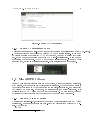
A simple Graphical User Interface is provided to Edit, Compile (or Assemble) and
upload the program. We start by programming the Input/Output ports of Atmega32,
which require some basic knowledge of binary number system and C language, with its bit
manipulation operators. After that we will proceed to the programming of the peripherals
like ADC, Timer/Counter etc. Since they are more complex, we will start with a software
library, in the form of C source les, that can be included in your program1 . Once you
1 We
are very much aware of the drawback of this method. When you include a le all the functions in
that will get added to your executable, increasing its size. Once the code is working, copy the necessary
functions to your source le, instead of including the whole le, to get rid of this diculty.
2