1
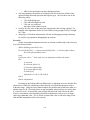
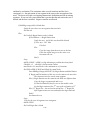
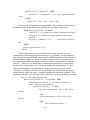
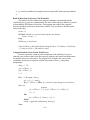
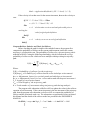
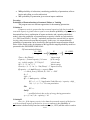
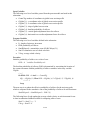
The following lines of code compute the probability of rollover after redirection
for trucks.
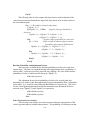
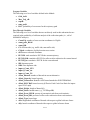
If {vehicle type} = {truck} _
And {hazard height} >= 2.25 _
And {hazard height} < 7.5 _
Then
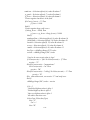
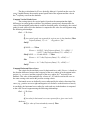
The program calls the subroutine subRolloverTafficSide to compute the rolloverratio parameter, which is used to determine the probability of the truck rolling over the
barrier. The probability of rolling over the barrier is then computed using the same
hyperbolic tangent model that was shown in Figure 41.
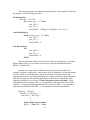
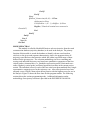
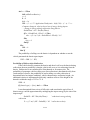
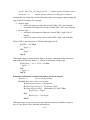
Call subRolloverTrafficSide()
s=0
B=8
shift = 1
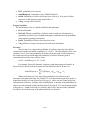
PRR = (1 - s) / 2 * App.Tanh((ratio - shift) * B) + (1 - s) / 2 + s
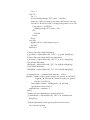
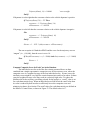
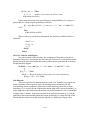
The probability of rolling over after redirection is dependent on whether or not the
vehicle penetrated the barrier upon impact or rolled over the barrier during redirection.
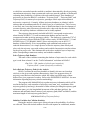
WRR = PRR * (1 - WP - WRV)
Trucks tend to only roll a quarter-turn onto their side, whereas' passenger vehicles
tend to roll multiple quarter-turns. The severity of rollovers for trucks is, therefore, likely
to be less than severity of rollovers for passenger vehicles; however, the baseline severity
(EFCCR65) for rollovers is currently the same value for all rollover events. The variable,
scalePOC, was defined here to scale the severity for truck rollovers if/when data warrant
it. The scale factor is applied to the EFCCR65 value as it is passed to
subCollision_Statistics for use in computing rollover-cost statistics.
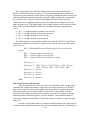
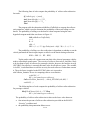
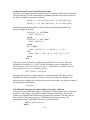
scalePOC = 1 '
KK = {set hazard type to rollovers}
Call subCollision_Statistics(…, oHzrd_EFCCR65(iAlt, KK) *
scalePOC,…)
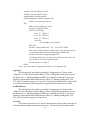
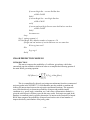
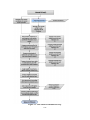
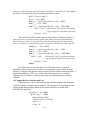
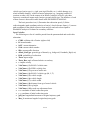
The following lines of code compute the probability of rollover after redirection
for passenger vehicles.
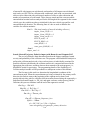
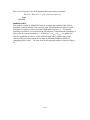
ElseIf VehCharac(iVeh, 4) = "C" Then
KK = {set hazard type to rollovers}
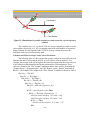
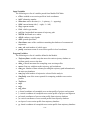
The probability of rollover after redirection is taken as the lesser value between:
One minus the percent of rollover-after-redirection provided on the RSAPv3
“Severity” worksheet and
the probability that penetration did not occur.
C-130