1
Acceptance Testing of Software Products for Cloud-Based On-Line Delivery
497
Each stakeholder listed above contributes to the final product quality
assurance, where testing plays the key role. However, due to the specificity of
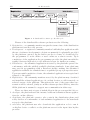
the life-cycle model presented in Figure 1, overall organization of the quality
assurance process is different from classic approaches [2]. Before going into more
detail let us first review the basic terminology.
1.1. Testing terminology
In each phase of its life-cycle a software product is being subjected to
static and dynamic analysis. The former refers to its static components, such
as specifications, source code and other documentation, while the later involves
experiments with its executable code.
Basic activities that may be performed during static analysis include inspections, walkthroughs and audits. Inspection is performed by the evaluation
team to verify the consistency of the product source code and its related documentation. It incurs costs to the team, as the activity is time consuming, must
be planned and properly documented – including a complete list of all shortcomings found by the team. A walk-through is a less formal presentation of the
source code by the developer to his/her peers, who may ask questions and suggest
improvements, and may be easily implemented for on-line communities with the
Internet forum mechanisms. Finally, audit is very similar to inspections, except
that the evaluation team is independent of the product developers. The activity
is less costly, as analysis concentrates on a specific subset of issues compared to
the scope addressed by inspections.
The objectives of experiments with an executable code during dynamic
analysis are: testing, to check for errors of specific types, and measurements, to
determine various characteristics of the product.
The basic notion in testing is the test case, defined as a single element
from the enumerable set of all possible behaviors of the tested code that may
be observed during experiments. A model used by testers to represent that set,
along with a predefined criterion used to decide whether to conclude the test as
satisfactory or to continue it to look for more errors, is called a testing strategy.
Two basic classes of strategies may be considered when planning the test: whitebox or structural, when test cases are selected based on an internal structure of the
test item known to the tester beforehand (usually its source code), and black-box
or functional, when the only source of information on the expected behavior of the
test item is its formal requirements specification or user manual. Note that, since
during experiments with the test item its source code may be used, selection
of a testing strategy to evaluate the submitted item by the distributor in the
distribution phase may determine the formally required content of the submission
uploaded by the developer in the development phase (see Figure 1.
Testing strategies and their related sets of test cases constitute a test
scenario, which implies a systematic observation of the expected behavior of the
test item during execution of its code in the controlled mode [3]. By ’systematic’
we mean here planning of which test cases and in what order should be exercised,