1
496
B. Wiszniewski
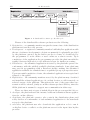
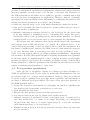
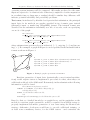
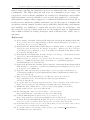
Figure 1. A distributable software product life-cycle
Phases of the distributable software products are the following:
1. Registration – a community member accepts the terms of use of the distribution
platform and enrolls to the process;
2. Development – a registered community member builds his/her application with
the use of software development tools just recommended or physically provided
by the platform operator. In the latter case the tool may be downloaded by
the programmer to work off-line or used on-line as a remote service. Upon
completion of the application the programmer provides the platform with the
required data and uploads it to the indicated server for further processing;
3. Distribution – the submitted application is tested by the platform operator for
conformance with the publicly available platform standards. Some platforms
may provide programmers with a Beta-test facility, making the submitted
application available for a limited time to a qualified group of prospective users.
Upon successful completion of tests, the submitted application is accepted and
released to the public;
4. Exploitation – all community members served by the platform may download
and install the released application code on their devices or call it remotely on
selected servers of the platform. Throughout the rest of the paper these two
scenarios will be referred jointly as on-line software-product delivery, since the
NIWA platform is assumed to support user communities in either way.
There are three major types of stakeholders in the process specified above:
1. developer, the platform user who invents, builds and submits software applications for on-line delivery;
2. distributor, the platform operator, who controls the distribution phase and
solely decides on conformance of each submitted application to the standards
set up for the platform;
3. subscriber, the platform user who downloads the application code to run it
on his/her device or calls it on the platform server for the input data he/she
provides.