1
SPI ISSW Science Validation Report
Page 2 of 21
The task of validation therefore is split into these three aspects:
•
Technical validation of interfaces and basic functioning without crashes is a part
of ISDC's software integration, hence performed by ISDC's Instrument Specialists
•
User interface and easiness-of-use validation is somewhat subjective, hence
performed by SPI scientists, if possible different from the software developers
•
Accuracy validation has many levels, all to be assessed by SPI scientists. The
developer made unit tests of the algorithm accuracy during development using
available or mocked test data, which need to be complemented by broader
validations within the full system using datasets prepared by other ISDC/SPI
tools. It is the main goal to collect all this here, with different issues of the
document presenting more and more of the completed work; early issues will list
'things-to-do'
We address the performance under the themes of
•
Energy calibration and gain correction
•
Dead time and effective observation time
•
Energy resolution and spectral performance
•
Angular resolution, source separation power, and location accuracy
•
Field of view size and performance changes
•
Detection efficiency
•
Background characteristics (as far as prelaunch estimates go)
Test Data
Two sources of test data exist:
(I)
(II)
Raw telemetry data from existing measurements, tailored for validation of
some Preprocessing and Performance Analysis functions, and
Calibrated-event data from sky simulations, which can be 'purpose-made' to
validate specific Data Preparation and Science Analysis functions.
Comments: Validation of tools on simulated event message data would be desirable in order to also test
the data grouping and event binning functions; but resources are inadequate for such a big task. Eventtype data ideally should be simulated for a characteristic astronomical case, to follow this through the
different tools. This involves adding time tags which correlate with pointing and their changes, and
ensure the consistency of event data files with pointing files, and other aux data files. Pierre Dubath has
been generating such file groups for the 'simulation pipeline' described earlier, and will check how much
he can do to import simulated events. Chris Shrader together with ISDC will investigate if simulated
events can be arranged such that the necessary aux data files can be generated.
Provision of binned event matrices and the auxilliary files associated with these in the proper data group
seems a realistic intermediate method, adequate for validation of the analysis tools.
For the validation exercise, astronomical test cases are:
-
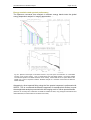
Crab source with a line feature and powerlaw spectrum: EBOUNDS, POINTING
and DETESPECTRA datasets as FITS files, spectra in cts/bin. Crab-like power
law source, with a superimposed 440 keV line, background spectral form
resembling Jean et al 1997 superimposed (but scaled for exposure of 34.5 ks).
(first provided Dec 2000; updated Feb 2002)
-
Cygnus region with set of sources with different spectra, and a diffuse component
(simplified spatial pattern). 4 point sources, including 2 black-hole (Cyg X-1 and
V404 Cyg), a neutron star binary (EXO2030+375) and Cygnus X-3 are modelled.
(first provided Jan 2001; updated Feb 2002; no extended component yet)
SPI ISDAG
14.05.02
issw-scival_V1.doc