1
Patient Challenges
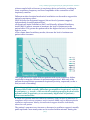
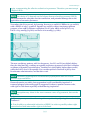
Moreover at PEEP 16, CO and SvO2 decreased. Overall PEEP 14 appears to be the
best compromise.
Q. Would you attempt another RM?
A. The increase in Crs during the previous RM was higher than the Crs we obtained
with the increase in PEEP. Now that we have a higher PEEP, an RM could have a
more sustained effect.
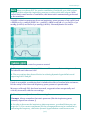
You perform a second 40 seconds-40 cmH20 sustained recruitment manoeuvre:
arterial systolic pressure and oxygen saturation do not significantly change during the
manoeuvre. After 20 minutes ABG improve: PaO2 170 mmHg (22.4 kPa), PaCO2 46
(6.1 kPa), pH 7.36. Crs increases to 37 ml/cmH2O, plateau pressure decreases to 27
cmH2O. Intrapulmonary shunt decreases to 23%. FiO2 is progressively reduced to 0.6
to maintain a PaO2 of more than 75 mmHg (9.9 kPa). The patient gradually improves
and is de-escalated and weaned from mechanical ventilation after seven days.
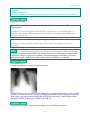
A 73-year-old lady is admitted to your ICU for treatment of pulmonary
thromboembolism (PTE) after hip replacement. She is obese (95 kg, with an
estimated ideal body weight of 65 kg) and there is no previous history of respiratory
disease. She is receiving i.v. heparin. On the third night, due to rapid respiratory
deterioration, she is intubated and mechanically ventilated.
The next morning, the patient is lightly sedated and being ventilated with pressure
support ventilation (PSV), with an above-PEEP pressure support (PS) level of 15
cmH2O. The PEEP level is set at 8 cmH2O and FiO2 at 0.6 and humidification is with
a Heat and Moisture Exchanger (HME).
She has just become severely dyspnoeic, with a respiratory rate of 32 bpm and Vt of
400 ml. There is some wheezing on auscultation but, otherwise, no other evidence of
superimposed or complicating pathology.
Causes of respiratory failure
Assessment of adequacy of ventilatory support
Choice of humidification device
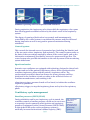
You hear few pathological sounds (some rhonchi and wheezing) on auscultation.
ABGs reveal pH 7.24, PaCO2 62 mmHg (8.1 kPa), PaO2 60 mmHg (7.9 kPa), BE -2
mEq/l. Haemodynamics are satisfactory with low level cathecholamine support. The
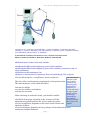
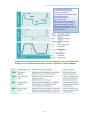
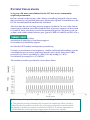
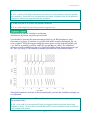
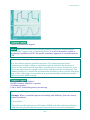
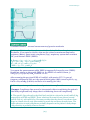
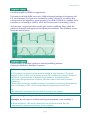
ventilator monitor shows the curves illustrated below. You also note that the endtidal CO2 pressure of 40 mmHg (5.3 kPa) is much lower than the arterial PaCO2
indicating an increased alveolar dead space.
[65]