1
Patient Challenges
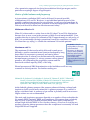
Q. Is the interaction between patient and ventilator satisfactory?
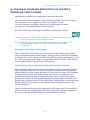
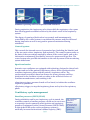
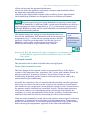
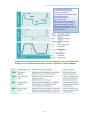
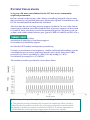
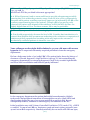
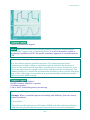
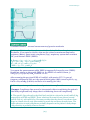
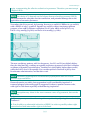
A. Yes, in spite of the high respiratory rate, there is no dysynchrony between patient
and ventilator. From the flow and pressure waveform it appears that all the patient’s
inspiratory efforts are supported by the ventilator.
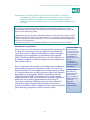
Q. What can you do to relieve the patient’s distress?
A. You could simply increase the pressure support level.
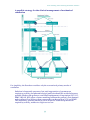
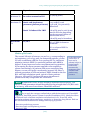
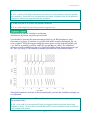
Assessment of patient-ventilator synchrony
Assessment of patient respiratory work load
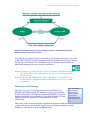
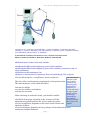
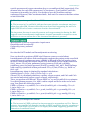
You decided to increase the pressure support level to 18. RR (respiratory rate)
decreases to 24 bpm, Vt increase to 450 ml while ABGs remain unchanged. P0.1 is
now 2 cmH2O. The following morning the nurse shows you the following ABGs: pH
7.37, PaCO2 45 mmHg (5.9 kPa), and PaO2 95 mmHg (12.5 kPa). The ventilator
monitor reports a respiratory rate of 17 bpm with tidal volume between 650 and 750
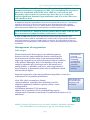
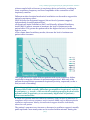
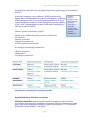
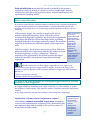
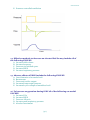
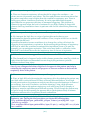
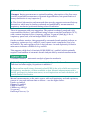
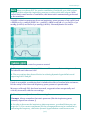
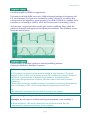
ml. P0.1 is 5 cmH2O. The ventilator monitor provides the curves shown below.
Though the patient is said not to be uncomfortable, you feel the ventilator settings are
not optimum.
Q. Given the respiratory rate (RR) and Vt on the ventilator, what can you say about
the measured P0.1?
A. P0.1 of 5 cmH2O is unexpectedly high and suggests that the patient has a high
respiratory drive. On the other hand the RR and Vt on the ventilator seem to indicate
a well-supported patient.
[59]