1
and libraries. The latter of course needs to call the logic-specific tools whenever a basic specification is
encountered.
HETS is based on the theory of institutions [16], which formalise the notion of a logic. The theory
behind HETS is laid out in [25]. A short overview of HETS is given in [27, 28].
HETS supports a number of input languages directly, such as Common Logic and OWL2 and HETCASL.
They will be described in the next sections.
2.1
Common Logic and the Common Logic Interchange Format (CLIF)
CLIF is specified in Annex A of the Common Logic standard [12]. HETS can directly read in files in CLIF
syntax, and also recursively reads in any imported files (cf. Sect. 8.1 for the syntax).
Common Logic itself does not support the specification of logical consequences, nor relative theory
interpretations, nor other features that speak about structuring and comparing logical theories. Michael
Grüninger has suggested certain special annotations comments for this purpose, which are supported by
HETS, see Sect. 8.1. Alternatively, CLIF syntax can be used for specifications within HETCASL files, or CLIF
files can be referred to within HETCASL files. HETCASL is a structuring language supporting relative theory
interpretations and other things, see Sect. 2.3 below.
2.2
OWL2
OWL2 is a W3C standard [3]. HETS can directly read in OWL2 files in all syntaxes (called “serialisations”) that the OWL API supports [2], including the native OWL XML syntax [31], the human-readable
Manchester syntax [21], as well as RDF [35]. The RDF data model has multiple possible syntaxes itself,
including RDF/XML [7] and the text-oriented Turtle syntax [8].
Since OWL2 does not support relative theory interpretations and other structuring features, such
things can only be expressed in HETCASL files. For this purpose, OWL2 Manchester syntax can be used
within HETCASL files, or OWL2 files can be referred to within HETCASL files.
2.3
HetCASL
For heterogeneous specification, HETS offers the Heterogeneous language HETCASL. HETCASL is not so much
a logic, but a meta language that can express relations of theories written in different logics, like logical
consequences, relative interpretations of theories, conservative extensions, translations of theories along
logic translations, etc.
HETCASL generalises the structuring constructs of CASL (Common Algebraic Specification Language [11,
29]) to arbitrary logics (if they are formalised as institutions and plugged into the HETS motherboard),
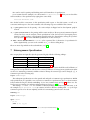
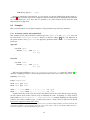
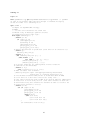
as well as to heterogeneous combinations of specifications written in different logics. See Fig. 1 for a
simple subset of the HETCASL syntax, where basic specifications are unstructured specifications or modules
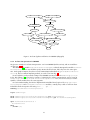
written in a specific logic. The graph of currently supported logics and logic translations (the latter are
also called comorphisms) is shown in Fig. 2, and the degree of support by HETS in Fig. ??.
With heterogeneous structured specifications, it is possible to combine and rename specifications, hide
parts thereof, and also translate them to other logics. Architectural specifications prescribe the structure
of implementations. Specification libraries are collections of named structured and architectural specifications. Refinements express the fact the a specification is becoming more specific. All this is supported
by HETCASL. For details, see [24, 25, 29].
3
Logics supported by Hets
HETS supports a variety of different logics. The following are most important for use with Common Logic:
Common Logic is an ISO standard published as “ISO/IEC 24707:2007 - Information technology — Common Logic (CL): a framework for a family of logic-based languages” [12]. It is based on first-order
3