1
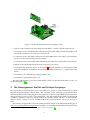
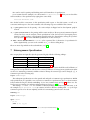
Figure 1: The HETS motherboard and some expansion cards
• a parser for the Common Logic Interchange Format (CLIF) — CLIF is a Lisp-like syntax for CL;
• a connection of CL to well-known first-order theorem provers like SPASS, darwin and Vampire, such
that logical consequences of CL theories can be proved;
• a connection of CL to the higher-order provers Isabelle/HOL and Leo-II in order to perform induction proofs in theories involving sequence markers;
• a connection to first-order model finders like darwin that allow one to find models for CL theories;
• support for proving interpretations between CL theories to be correct;
• a translation that eliminates the use of CL modules2 . Since the semantics of CL modules is special
to CL, this elimination of modules is necessary before sending CL theories to a standard first-order
prover;
• a translation of the Web Ontology Language OWL to CL;
• a translation of propositional logic to CL.
This guide will introduce you to these functionalities of HETS. For the full functionalities of HETS, see
the HETS user guide [44].
2
The Heterogeneous Tool Set and Its Input Languages
The central idea of the Heterogeneous Tool Set (HETS) is to provide a general framework for formal
methods integration and proof management. One can think of HETS acting like a motherboard where
different expansion cards can be plugged in, the expansion cards here being individual logics (with their
analysis and proof tools) as well as logic translations. The HETS motherboard already has plugged in
a number of expansion cards (e.g., the theorem provers Isabelle, SPASS and more, as well as model
finders). Hence, a variety of tools is available, without the need to hard-wire each tool to the logic at
hand.
HETS consists of logic-specific tools for the parsing and static analysis of the different involved logics, as
well as a logic-independent parsing and static analysis tool for structured and architectural specifications
2 Actually,
we are using a revised semantics for modules, as proposed recently in [33].
2