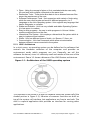
1
Examples of modern UNIX operating systems include IRIX(from SGI), Solaris (from Sun), Tru64 (from Compaq) and Linux (from the Free Software community). Even though these different "flavors" of UNIX have unique characteristics and come from different sources, they all work alike in a number of fundamental ways. Evolution of UNIX: 1965 : AT&T, GE, IBM and Project MAC join together to develop a time-sharing system named MULTICS (Multiplexed Information and Computing Service). 1969 : AT&T Bell Labs drops out of MULTICS project. Ken Thompson writes first version of UNICS on a PDP-7 machine. UNICS is pun on MULTICS and stands for Uniplexed Information and Computing Services. UNICS is changed to UNIX. 1973 : Re-written in high level language C, thus making it machineindependent. 1977-1981 : Unix was widely available at minimal cost and became popular for scientific applications. 1982 : Unix System III is released. 1984-85 : Unix System V is released. 1992-93 : 4.4 BSD is released. 1994 : Linux 1.0 is released. 2001 : Linux 2.4 is released. 5.1.1 Unix is available in many flavors like: AIX (Advanced IBM Unix) HP-UX ( Hewlett Packard Unix) MINIX (Minimal Unix) SCO UNIX SOLARIS XENIX SUN OS LINUX 5.1.2 Features Of Unix Portability : As Unix has been re-written in C , hence it can run on machines from microcomputers to mainframe computers. Security : Unix is a very secure operating system. Without the proper username and passwords, it is not possible to work on Unix. Background Processing : Unix employs a technique of Background Processing, wherein jobs/tasks are executed in the background with the minimal interaction from the user. ECS - 039 OBJECT ORIENTED SYSTEMS AND C++ Notes prepared by Diwakar Yagyasen -2-