1
apart from the time-limit. The current integration of zChaff into HETS has been
tested with zChaff 2004.11.15.
11
Limits of Hets
HETS is still intensively under development. In particular, the following points
are still missing:
• There is no proof support for architectural specifications.
• Distributed libraries are always downloaded from the local disk, not from
the Internet.
• Version numbers of libraries are not considered properly.
• The proof engine for development graphs provides only experimental support for hiding links and for conservativity.
12
Architecture of Hets
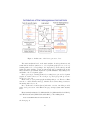
The architecture of HETS is shown in Fig. 8. How is a single logic implemented
in the Heterogeneous Tool Set? This is depicted in the left column of Fig. 8.
HETS provides an abstract interface for institutions, so that new logics can
be integrated smoothly. In order to do so, a parser, a static checker and a prover
for basic specifications in the logic have to be provided.
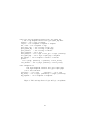
Each logic is realized in the programming language Haskell [30] by a set of
types and functions, see Fig. 7, where we present a simplified, stripped down
version, where e.g. error handling is ignored. For technical reasons a logic is
tagged with a unique identifier type (lid), which is a singleton type the only
purpose of which is to determine all other type components of the given logic.
In Haskell jargon, the interface is called a multiparameter type class with functional dependencies [31]. The Haskell interface for logic translations is realised
similarly.
The logic-independent modules in HETS can be found in the right half of
Fig. 8. These modules comprise roughly one third of HETS’ 100.000 lines of
Haskell code.
The heterogeneous parser transforms a string conforming to the syntax in
Fig. 1 to an abstract syntax tree, using the Parsec combinator parser [15]. Logic
and translation names are looked up in the logic graph — this is necessary to
be able to choose the correct parser for basic specifications. Indeed, the parser
has a state that carries the current logic, and which is updated if an explicit
specification of the logic is given, or if a logic translation is encountered (in the
latter case, the state is set to the target logic of the translation). With this, it
is possible to parse basic specifications by just using the logic-specific parser of
the current logic as obtained from the state.
21