1
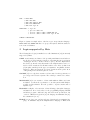
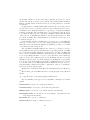
SPEC ::=
|
|
|
|
BASIC-SPEC
SPEC then SPEC
SPEC then %implies SPEC
SPEC with SYMBOL-MAP
SPEC with logic ID
DEFINITION ::=
|
|
|
logic ID
spec ID = SPEC end
view ID : SPEC to SPEC = SYMBOL-MAP end
view ID : SPEC to SPEC = with logic ID end
LIBRARY = DEFINITION*
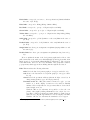
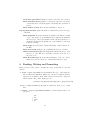
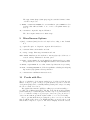
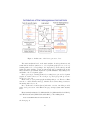
Figure 1: Syntax of a simple subset of the heterogeneous specification language.
BASIC-SPEC and SYMBOL-MAP have a logic specific syntax, while ID stands for
some form of identifiers.
2
Logics supported by Hets
The following list of logics (formalized as so-called institutions [11]) is currently
supported by HETS:
CASL extends many sorted first-order logic with partial functions and subsorting. It also provides induction sentences, expressing the (free) generation
of datatypes. For more details on CASL see [28, 6]. We have implemented
the CASL logic in such a way that much of the implementation can be reused for CASL extensions as well; this is achieved via “holes” (realized via
polymorphic variables) in the types for signatures, morphisms, abstract
syntax etc. This eases integration of CASL extensions and keeps the effort
of integrating CASL extensions quite moderate.
CoCASL [27] is a coalgebraic extension of CASL, suited for the specification of
process types and reactive systems. The central proof method is coinduction.
ModalCASL [19] is an extension of CASL with multi-modalities and term
modalities. It allows the specification of modal systems with Kripke’s
possible worlds semantics. It is also possible to express certain forms of
dynamic logic.
HasCASL is a higher order extension of CASL allowing polymorphic datatypes
and functions. It is closely related to the programming language Haskell
and allows program constructs being embedded in the specification. An
overview of HASCASL is given in [37]; the language is summarized in [34],
the semantics in [36, 35].
Haskell is a modern, pure and strongly typed functional programming language. It simultaneously is the implementation language of HETS, such
2