1
•
•
•
The assume step specifies the assumption that you make when continuing down the main
flow.
The alternative flows have a condition attached to them and this condition will replace the
assume step of the main flow if the use case executes the alternative flow.
Only assume steps have alternative flows connected to them.
Action Blocks
Concept of action blocks advocates that there is a certain representation flaw in general use
case modeling approaches as these do not efficiently structure the information. To overcome
these lack action blocks are used. An action block is a set of three actions step each
corresponding to input, system responsibility and output. By dividing the different events
which occurs during the actor and system dialogue into separate action blocks we can get a
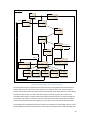
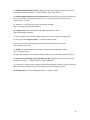
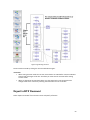
better overall structure of use case. The following figure represents the action blocks of our
ATM system.
Action Block 1
Action Steps:
1.
2.
3.
User inserts cards to withdraw money. (Input)
System reads the bank id and account number from the card (System Responsibility)
The id and account number are valid (Assume)
4. System prompts user to enter password. (Output)
Action Block 2
Action Steps:
1.
2.
3.
User enters password. (Input)
The password is valid. (Assume)
System prompts user to enter amount to withdraw. (Output)
Action Block 3
Action Steps:
1.
2.
3.
4.
Use enters the amount of money to withdraw. (Input)
System validates the account balance. (System Responsibility)
System subtracts the amount from the original account balance. (System Responsibility)
System dispenses card and cash. (Output)
56