1
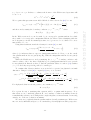
several known ways to calculate the heat kernel. First, if one is only interested in large mass
behavior (for a massive field of mass m), the curvature expansion in terms of local invariants
is known for many field types up to 10th order [6]. If we wish to know the heat kernel outside
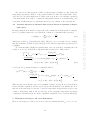
of a 1/m expansion, then we can expand the heat kernel as a sum over normalized eigenfunctions of the Laplacian weighted by their eigenvalues; this is the approach used in the series
of papers [7–10] and again by [3] for AdS2 × S 2 spacetimes. These eigenfunctions are generally special functions and the details, particularly for higher spin fields, can be challenging.
In two papers [1, 12], Denef, Hartnoll and Sachdev developed a method1 not directly
based on the heat kernel approach. In this method, developed from an argument in [15]
(also see [16, 17]), the partition function Z(∆) (of a massive scalar of mass m) is calculated
via a complex analysis trick.2 Rather than specifying a physical mass m (corresponding to
a particular conformal dimensional ∆), and then calculating the partition function at that
mass, this method studies Z(∆) as a function in the complex ∆ plane. If we assume Z(∆) is
a meromorphic function in complex ∆ plane,3 then to find the function completely we need
only the location and multiplicities of its poles and zeros, as well as one (entire) function
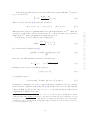
which we term exp[Pol(∆)], where Pol(∆) is some polynomial of ∆. In the case of Z(∆),
this extra function is completely constrained by the behavior of the function at large mass;
that is, we can use the heat kernel curvature expansion to completely determine Z(∆).
As shown in [1], for scalars Z(∆) has only poles; these poles are due to zero modes
in Euclidean space, which Wick-rotate to quasinormal modes in Lorentzian signature (or
normal modes in global Lorentzian AdS). As such we will use the term “zero mode method”
when working in Euclidean signature, but “quasinormal mode method” when working in
Lorentzian signature. In fact [1] does provide a formula for thermal AdS using a “normal
mode” method, referencing the global normal modes. For odd-dimensional AdS spacetimes,
these modes are sufficient and, as shown for AdS3 in [1], they correctly reproduce the
partition function in [21].
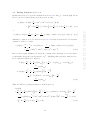
However, as we will show in this paper, on even-dimensional AdS spacetimes the normal
modes are insufficient. Although the normal modes capture all temperature-dependent
information (which is often the behavior of primary interest), if one wants to obtain the
temperature-independent piece, the normal modes are insufficient. Since the temperature1
Although we will primarily discuss the case of AdS2n in this note, this method actually applies to
the case of de Sitter space as well, as was discussed in the original paper of [1]. It would be interesting
to understand the relations between the interpretation of de Sitter quasinormal modes as highest-weight
representations [13, 14] and their roles in this 1-loop partition function method.
2
This method has been generalized to fields of arbitrary spin on AdS3 in [18–20].
3
This assumption is reasonable; we will apply boundary conditions in terms of ∆, and there is no reason
to expect a branch cut or essential singularity in Z(∆).
–2–
JHEP06(2014)099
Of course these eigenfunctions of the Laplacian themselves arise from the group theory
structure of the spacetime; the Laplacian is the quadratic Casimir for the motion group
of the space. As such Gopakumar et al. developed a method for computing the heat
kernel from group theory characters [11], which they extended to AdSd+1 for d ≥ 2 in [2].
This powerful method works well for spacetimes where we understand the group theory
structure.