1
AN001 MD5
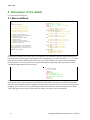
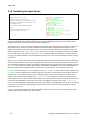
3. Data Flow Block Diagram
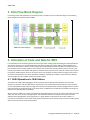
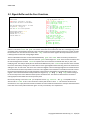
In planning a multi-node application for GreenArrays chips, we think in terms of a data flow diagram. The following
Figure diagrams this implementation of MD5:
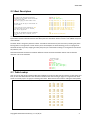
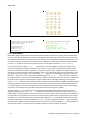
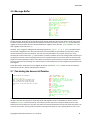
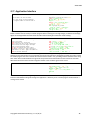
4. Allocation of Code and Data for MD5
Let's describe some of the thinking that led up to this layout. After reading and understanding the md5 specification it
was obvious that some sort of extended precision arithmetic and logic was needed. MD5 is a 32 bit algorithm and
Green Arrays architecture is 18 bits. The first thought was to define 36 bit operators for addition and each of the four
bit-oriented functions needed, as well as 32 bit rotation. Each of these was actually coded in order to see how much
memory they would consume. After coding the four functions there wasn't room for much else. Each function implied
having three double precision items on the stack as inputs. This occupies six stack locations leaving only four more to
work with. Stack overflow was a serious possibility. In addition, watching the numbers in the simulator was difficult
since they didn't line up in nibbles as 32 bit hex numbers would.
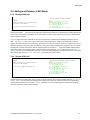
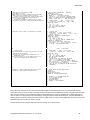
4.1 32 Bit Operations in 16 Bit Halves
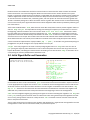
This problem of visibility while debugging is what inspired the idea of splitting 32 bit operations into two 16 bit
operations in partner nodes. Suddenly the bit-wise functions only required three stack locations per node instead of
six. The lookup tables could be split into a high 16 bit word and a low 16 bit word. Numbers being passed from node to
node could easily be recognized as high or low 16 bit halves. In addition this introduced some parallel processing to an
otherwise very sequential set of operations.
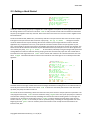
When it comes to addition or rotation you might think that propagating the carry across nodes would waste some time
and it does, but not as much as you might expect. The low partner node can accumulate carries from up to three
additions before propagating it to the high partner in a single addition. 32 bit rotation can be done using the +*
instruction to shift bits from T into A then sharing and oring those bits across partner nodes to achieve a 32 bit rotation
with the minimum of inter-node communication.
4
Copyright© 2010-2013 GreenArrays, Inc. 10/23/14