1
Methods
methods. For discussion concerning the absolute
standard curve method [Applied Biosystems, 1997].
The relative standard curve method is used to assess the
amount of a particular transcript in a group of samples.
It is comparable to a multiple-tissue northern blot. It
requires that a template dilution series of a cDNA
standard be included for each gene on each plate. For
relative quantitation, the template concentration values
are arbitrary. Quantities interpolated from the resulting
standard curve are used to calculate relative mRNA levels
in each unknown sample.
Q-PCR analysis of nuclear receptor expression
containing a polyA sequence will be amplified, and
incomplete, or partially degraded RNA will not be detected
in the subsequent QPCR assay.
Use of the GSRP appears attractive at first, since a
specific target will be amplified. This can be potentially
problematic, however, because the RT efficiency of each
transcript has to be taken into consideration. Also, RNA
secondary structure may prevent the efficient RT of a
specific target, and would also have to be taken into
consideration.
The comparative Ct method (or ΔCt) is used to assess
relative changes in mRNA levels between two samples,
and does not require the use of the template dilution
series. It does, however, require that the amplification
efficiencies of the genes to be compared (described later)
be the same [Applied Biosystems, 1997]. Cycle times,
rather than interpolated template quantities, are used for
the calculations. An example of employing the
comparative Ct method would be the comparison of the
expression of a nuclear receptor target gene in wild-type
vs. receptor-null animals, or ligand-treated vs. untreated
animals.
One-step vs. Two-step Reverse Transcriptase
PCR
Reverse transcription (RT) is the enzymatic process by
which complementary DNA (cDNA) is synthesized by an
RNA-dependent DNA polymerase, i.e. reverse
transcriptase. It requires a small oligonucleotide DNA
primer. There are several types of primers, including
gene-specific reverse primers (GSRP), oligo-(d)Ts, and
random hexamers, also called p(dn)6. The GSRP is
specific to the cDNA to be synthesized, and may be used
to selectively RT a specific RNA transcript. Oligo-(d)Ts
consist of short stretches of thymines and selectively
+
target RNAs with a polyA tail, or any polyA tract. Random
hexamers are mixtures of 6 base-pair primers with varying
sequences. They randomly bind their complementary
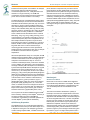
RNA sequences. A schematic representation of the
various types of priming for reverse transcription is shown
in Figure 2.
cDNA is synthesized in one or two steps. One-step
RT-PCR is done in a single reaction in which the reaction
mixture contains the reverse transcriptase and the PCR
polymerase. Here, both the RT primer and one of the
PCR primers is a GSRP. Two-step RT-PCR involves two
separate reactions for the RT and the PCR, and the RT
primer is either oligo-(d)Ts, or random hexamers. The
RT reaction is carried out at 42°C to reduce or inhibit the
occurrence of RNA secondary structure.
For quantitative RT-PCR (QPCR), random hexamers are
used to ensure the efficient amplification of all RNAs in
a sample. Because the primer sequences are random
and, therefore, can bind anywhere along the RNA, there
is a very high probability that all transcripts will be reverse
transcribed at near 100% RT efficiency (ABI, personal
communication). When using oligo-(d)Ts, only RNAs
www.nursa.org
Figure 2. Representation of RNA priming for reverse transcription.
See text for more details
RNA and cDNA Preparation
Please refer to the sections “Q-PCR supplies, reagents
and stock solutions” and “Preparation of cDNA Standards”
in the Supplementary File 1 for the detailed protocols and
worksheets for this section.
Total RNA is prepared from cells or frozen tissues with
RNA STAT-60 according to the manufacturer′s
instructions. For a typical assay, 4µg of total RNA is
treated with a 1:5 dilution of RNase-free DNase I in the
presence of 4.2mM MgCl2 in a final volume of 20µl. This
is performed in 0.2ml thin-walled PCR tubes in a standard
thermocycler at 37°C, 30 min., 75°C, 10 min., and 4°C
hold. The reverse-transcription mix consisting of 1X First
Strand Buffer, 10mM DTT, 200U of SuperScript RTII
reverse transcriptase, 2mM dNTPs and 0.08µg/µl random
hexamers is then added directly to the tubes with the
DNAse-treated RNA for a final volume of 100µl.
The cDNA synthesis is carried-out in the thermocycler at
25°C for 10 min., 42°C for 50 min., 72°C for 10 min., and
4°C hold. Following the reverse-transcription,
DEPC-treated H2O is added to the unknown samples to
bring the volume to 200µl, and the cDNA concentration
to 20ng/µl. (Note that samples used as cDNA standards
are not diluted prior to making the 5-fold dilution series
used in primer validation and standard curve assays.)
This will result in enough template cDNA to test
approximately 40 QPCR targets.
NRS | 2003 | Vol. 1 | DOI: 10.1621/nrs.01012 | Page 3 of 7