1
106
Hardy
16. A 12% SDS-PAGE gel is suitable for separating proteins in the range of approx
14 –100 kDa. The volumes of reagents given in this method to prepare a 12%
SDS-PAGE gel are adapted from Sambrook et al. (25), which also gives the volumes of reagents required to prepare gels of 6%, 8%, 10%, and 15% concentration. Separating the translation products on several gels of different percentages
(e.g., 8%, 10%, and 14% gels) (21) can increase the likelihood of detecting the
larger and smaller truncated proteins. The use of 5–18% gradient SDS-PAGE
has been reported to give better resolution for a broad size range of truncated
proteins (11).
17. The signal strength may be increased by treatment of the gel with Amplify™
fluorographic enhancement reagent (Amersham Life Science) for 20 – 30 min
after the gel has been fixed. The gel is then rinsed in distilled water and dried
under vacuum. Fluorography is performed with intensifying screens overnight at
–70°C. Some loss in resolution may be observed following fluorographic enhancement. Fluorographic enhancement is unnecessary if a strong signal can be obtained
by autoradiography.
Acknowledgments
I would like to thank all my colleagues for many helpful discussions on
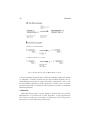
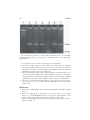
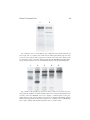
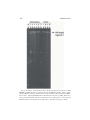
PTT, in particular Dr. David Bourn for his advice and comments during preparation of the manuscript and Kim Hampson for providing the BRCA1 autorad
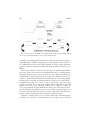
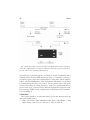
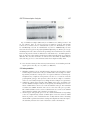
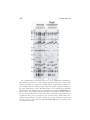
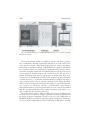
and information used in the preparation of Fig. 1. I would also like to thank
Professor Georgia Chenevix-Trench and Dr Sue Shanley, of the Queensland
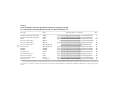
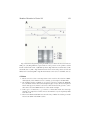
Institute of Medical Research, Brisbane, Australia, for the primer sequences
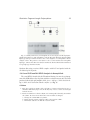
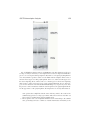
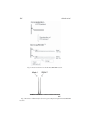
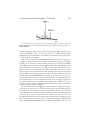
used for PTT of the PTCH gene illustrated in Fig. 2.
References
1. Roest, P. A. M., Roberts, R. G., Sugino, S., van Ommen, G-J. B., and den Dunnen,
J. T. (1993) Protein truncation test (PTT) for rapid detection of translation-terminating mutations. Hum. Mol. Genet. 2, 1719–1721.
2. Powell, S. M., Petersen, G. M., Krush, A. J., Booker, S., Jen, J., Giardiello, F. M.,
et al. (1993) Molecular diagnosis of familial adenomatous polyposis. N. Engl. J.
Med. 329, 1982–1987.
3. Rowan, A. J. and Bodmer, W. F. (1997) Introduction of a myc reporter tag to
improve the quality of mutation detection using the protein truncation test. Hum.
Mutat. 9, 172–176.
4. Becker, K.-F., Reich, U., Handschuh, G., Dalke, C., and Höfler, H. (1996) Nonradioactive protein truncation test (nrPTT) for rapid detection of gene mutations.
Trends Genet. 12, 250.
5. Gardner, R. J., Bobrow, M., and Roberts, R. G. (1995) The identification of point
mutations in Duchenne muscular dystrophy by using reverse-transcription PCR
and the protein truncation test. Am. J. Hum. Genet. 57, 311–320.