1
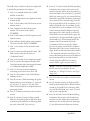
Semiempirical: The time required for
computation increases as N3 or N2, where N is
the number of atoms in the model.
MM2: The time required for performing
computations increases as N2, where N is the
number of atoms.
In general, molecular mechanical methods are
computationally less expensive than quantum
mechanical methods. The suitability of each
general method for particular applications can
be summarized as follows.
Molecular Mechanics Methods
Applications Summary
Molecular mechanics in Chem3D apply to:
• Systems containing thousands of atoms.
• Organic, oligonucleotides, peptides, and
saccharides.
• Gas phase only (for MM2).
Useful techniques available using MM2 methods
include:
• Energy Minimization for locating stable
conformations.
• Single point energy calculations for comparing
conformations of the same molecule.
• Searching conformational space by varying a
single dihedral angle.
• Studying molecular motion using Molecular
Dynamics.
ChemOffice 2005/Chem3D
Quantum Mechanical Methods
Applications Summary
Useful information determined by quantum
mechanical methods includes:
• Molecular orbital energies and coefficients.
• Heat of Formation for evaluating
conformational energies.
• Partial atomic charges calculated from the
molecular orbital coefficients.
• Electrostatic potential.
• Dipole moment.
• Transition-state geometries and energies.
• Bond dissociation energies.
The semiempirical methods available in Chem3D
and CS MOPAC apply to:
• Systems containing up to 120 heavy atoms and
300 total atoms.
• Organic, organometallics, and small oligomers
(peptide, nucleotide, saccharide).
• Gas phase or implicit solvent environment.
• Ground, transition, and excited states.
Ab initio methods, available through the Gaussian
interface, apply to:
• Systems containing up to 150 atoms.
• Organic, organometallics, and molecular
fragments (catalytic components of an
enzyme).
• Gas or implicit solvent environment.
• Study ground, transition, and excited states
(certain methods).
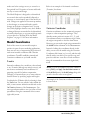
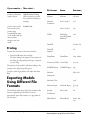
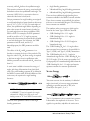
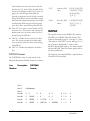
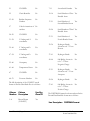
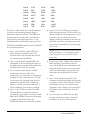
The following table summarizes the method types:
Computation Concepts
Computational Methods Overview
• 131