1
Testing Interactive Programs
Libes
suchas VMS and DOS are similarly lacking.
Expect - A Tool for RegressionTesting Interactions
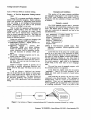
Expect[3] is a programspecificallydesignedto
interactwith interactiveprograms. Expectcommunicates with processesby interposingitself between
them and acting as an intelligent communications
switch. Pseudo-ttysl2l are used so that proc€sses
believethey are talking to a real user.
This is useful for regressiontesting interactive
programs. Expect readsa script that resemblesthe
dialogue itself. By following the script, Expect
knows what can be expectedfrom a program and
what the correctresponses
shouldbe. The script can
specify responses
by patterns,and can take different
actionson differentpatterns.
Scriptsarewritten in a high-levellanguage(Tcl
- Tool ControlLanguaget4lt5l) andsupport:
o send/expectsequences- expect patternscan
includeregularexpressions.
o high-level language
Control flow
(if/then/else, while, etc.) allows different
actions on different inputs, along with pro,
ceduredefinition,built-in expressionevaluation, and execution of arbitrary UNIX programs.
o job control - Multiple programscan be controlled at the sametime.
a user interaction- Control can be passedfrom
scriptedto interactivemode and vice versaat
any time. The user can also be treatedas an
I/O source/sink.
Expect is actually capable of general use in
automatingor partially automatinginteractiveprograms,howeverthis paper will focus on its use in
testing.
I will not discussa high-leveltest harness.
This can be providedby any numberof extantpackagesor shell scriptsthat are alreadyin use for testing non-interactiveprograms. This paperfocuseson
the low-level problems with program interaction
itself which differ significantlyfrom non-interactive
testing.
Examplesand Guidelines
This section of the paper presentsguidelines
and examplesusing Expect to test commoninteractive UNIX tools, building upon earlier work [7].
Familiarity with the rudimentsof Expectand UNIX
is assumed.
Example- passwd
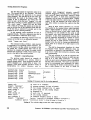
The UNIX passwd programtakes a username
as an argument,and interactivelypromptsfor a password. The Expect script in Listing 1 takes a usernameand a passwordas arguments,and can be run
non-interactivelv.
set passhrord Ilindex
spa$rn passwd [lindex
expect "password: "
gend "$password\r"
expect "passwords"
send "$password\r"
expect eof
$argv 21
$argv 1]
Listing 1: Non-interactivepasswd scrípt. First
argumentis username.Secondargumentis new
password.
In the first line of the script, the variablepassword is set to the value of the expressionin biackets. This expressionreturnsthe secondargumentof
the scriptby usingthe lindex command(list index).
The first argumentof lindex is a list, from which it
retrievesthe elementcorresponding
to the positionof
the secondargument. argv refers to the arguments
of the script, in the same style as the C language
argv.
The next line startsthe passwdprogram,with
passedas an argument.
the username
In the third line, expect looks for the pattern
"password:". There is no action specified,so the
expectjust waits until the patternis found before
continuing.
After receivingthe prompt, the next line sends
a passwordto the currentprocess.The \r indicatesa
(All the "usual" C conventions
carriage-return,
are
supported.) There are two send/expectsequences
becausepasswdasksthe passwordto be typed twice
as a spelling verification. There is no point to this
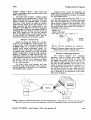
Figure 1: An instanceof Expect,communicatingwith 5 interactiveprocesses
directedby a script.
136
Summer '92 USENIX - June 8-June12, L992- SanAntonio,TX