1
SD63DL
Ambient Temperature Limits
Models 63BD & 63BD-L ........ -40° to +180°F (-40° to +82°C)
Models 63SD & 63SD-L......... -40° to +250°F (-40° to +120°C)
Controller Differential ........................... 3.1 ±0.5 psig (others optional)
INSTALLATION
Shipping and Storage
If the controller is to be stocked, stored, or shipped to another location prior to piping, make sure that the
factory installed plastic plugs are in the ports to prevent entry of moisture, dirt, or other contaminants.
Mounting
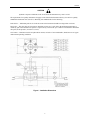
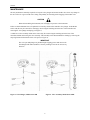
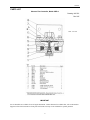
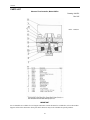
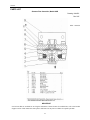
Mounting dimensions and the locations and sizes of connections are shown on the installation drawing; see Figure 1.
The controller may be mounted in any position. Install the needle valve and feedback connections as close to the
controller as possible to minimize pressure drop between these points. The supply to the controller must be filtered
to remove any solids.
CAUTION
When installing the constant downstream controller, be sure the external needle valve is
open; see Figure 1. Failure to do this could result in applying a differential pressure
across the diaphragm of the flow controller in excess of its rate limit, thus causing the
diaphragm to rupture.
Blow out all piping before connections are made to prevent the possibility of dirt or chips entering the controller.
Use pipe sealant sparingly, and then only on the male threads. A non-hardening sealant is strongly recommended.
Connect the controller to a source of clean, dry, oil-free instrument air. See Instrument Air Requirements.
CAUTION
Exceeding the specified ambient temperature limits can adversely affect performance
and may cause damage to the controller.
CAUTION
Supply pressure in excess of that stated in the Specifications section may cause damage
to the controller.
Instrument Air Requirements
Connect the instrument to a source of clean, dry, oil-free instrument air. Failure to do so will increase the possibility
of a malfunction or a deviation from specified performance.
CAUTION
Use of process fluids other than instrument air is not recommended. No claim is made as to
the suitability of this product for use with other process fluids, such as hazardous gases,
except as listed on the appropriate certificate. Non-approved instruments are suitable for
use with instrument air only. Optional features and modifications such as tapped exhaust do
not imply suitability for use with hazardous gases except as listed on the approval
certificate.
There are many types of synthetic compressor lubricants. Some may not be compatible with the materials used in
construction of the instrument. Wetting of these materials by such an oil mist or vapor, etc., may cause them to
deteriorate. This may ultimately result in failure of the positioner.
2