1
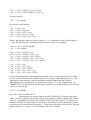
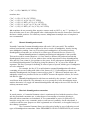
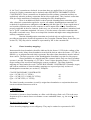
9), the ”best” constraints are declared. At run-time these are applied first (in 1B5 passes, cf.
section 18). Riskier constraints may be declared under HEURISTIC-DISAMBIGUATIONCONSTRAINTS. These constraints are formulated just like ordinary constraints and they are
applied only when the ordinary constraints find no more applications. Thus, heuristic constraints
work just on the small share of ambiguity remaining after safe disambiguation.
There is an additional control on how heuristic disambiguation constraints apply.
After a heuristic constraint has applied to word w, all ordinary disambiguation constraints are
rechecked for application on ambiguities still remaining left and right of w. Proper application of
one heuristic constraint may clear the sentence in such a manner that ordinary constraints are
properly applicable in the new situation. In this way, use of heuristic constraints is minimized, and
use of ”good” constraints maximized. Of course, it is in the nature of heuristic constraints that
they make occasional errors. These errors impair the situation and might cause misapplication of
ordinary constraints as well.
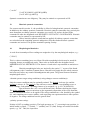
Heuristic disambiguation constraints are invoked only on explicit request, by
providing an appropriate fourth call argument to the Constraint Grammar Parser at run-time (see
section 18). They may also be omitted or represented by NIL in the constraint file.
11.
Clause boundary mappings
Intrasentential clause boundaries should be indicated by the feature **CLB in the readings of the
appropriate words. Many clause boundaries stem from the lexicon where the feature <**CLB> is
marked e.g. on subjunctions and relative pronouns. But often clause boundaries must be inferred
from context. The basic properties of the disambiguation formalism is apt also for this purpose.
Clause boundaries are mapped much like syntactic labels. Only one clause boundary
operator is needed. The meaning of =**CLB is: ”insert a clause boundary feature, **CLB, in the
target reading of the word-form satisfying the context conditions”. The clause boundary
mappings are listed under the word CLAUSE-BOUNDARY-CONSTRAINTS. Domains, targets,
and context conditions of clause boundary mappings are expressed precisely as those of
disambiguation constraints (see section 9). Examples:
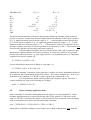
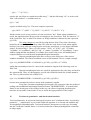
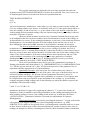
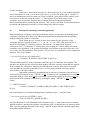
CLAUSE-BOUNDARY-CONSTRAINTS
(@w =**CLB (CC) (1C VFIN))
(@w =**CLB (CC) (1 NOM) (2C VFIN))
(@w =**CLB VFIN (-1C VFIN))
(a)
(b)
(c)
The clause boundary constraints (a) and (b) assign clause boundaries to conjunctions that start
certain coordinated structures such as:
… and went …
… but John said …
Constraint (c) inserts a clause boundary at a finite verb following a finite verb. This is the most
frequent way for a matrix clause to terminate a center-embedded clause, e.g. the word is in the
sentence:
The book [that he reads] is boring.
Clause boundary mappings are not obligatory. They may be omitted or represented as NIL.