1
Operation
Reception of data
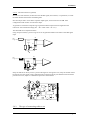
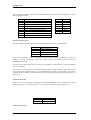
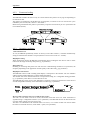
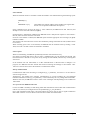
When not transmitting data, the MR1200 is permanently listening out for radio channel activity. If data
is detected, the modem informs the terminal by setting ON the 109-DCD line, before passing the data
on. The terminal cannot refuse communication with the modem..
Line 106-CTS is also set ON enabling the terminal to reply with its data.
Termination of radio communication
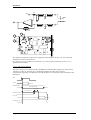
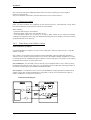
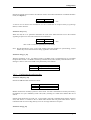
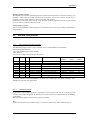
The MR1200 returns to its rest state after the pre-configured time delay, once 105-RTS is set OFF
AND data transfer has been concluded (parameter tp_rc).
Communication may, on the other hand, be interrupted by the modem to avoid exceeding the preconfigured maximum transmission time (tp_emi parameter), if a value has been set.
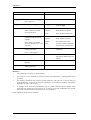
Use of circuits 107-DSR and 106-CTS
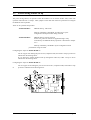
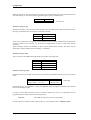
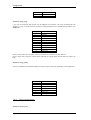
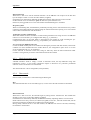
Circuit 107-DSR is normally set ON during radio data transmission and set OFF when communication
ends. It can, however, be configured to be ON permanently (ges_dsr parameter).
Once radio transmission has begun, 107-CTS remains ON and is only set OFF to signal transmission
data buffer overflow. The signal can be used to control data flow from the terminal.
4.3.5.
V25bis mode
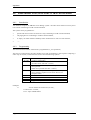
The "V25bis" control mode makes a more extensive use of the serial interface - only 105-RTS is
unused - giving the terminal total control over the modem through a set of commands and responses
defined by the V25bis standard. Where a number of radio modems are networked, individually
addressed data messages can also be sent out.
Each modem is allocated a number between 001 and 255 constituting its network address (ad_mod
parameter).
Rest
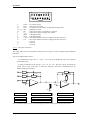
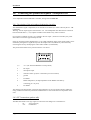
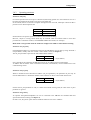
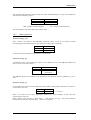
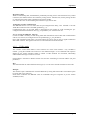
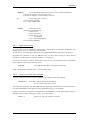
The terminal holds the 108/2-DTR line OFF (logic 0). Circuits 106-CTS and 109-DCD are also OFF.
Dialogue
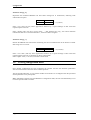
The terminal opens communication with the MR1200 by setting ON 108/2-DTR. The modem replies
by setting ON circuit 106-CTS.
Under these conditions the MR1200 waits for commands and gives responses as per the V25bis
standard (CCITT).
ETIC - MR1200 - USER MANUAL - 908709-02
Page 33