1
MIDI
The only MIDI facilities provided as standard with The Music
Machine are the ability to control internal or externa! note-on or noteoff events. In most cases the action ofturning a note on or off requires
the transmission of three bytes.
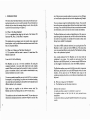
Note-on event:
lOOlnnnn
NOTE-ON control byte. nnnn is a tour-bit
number corresponding to the MID1channel
number. 0000 is Channel 1, 0001 is
Channel 2, and 1111 is Channel 16, fol"
example.
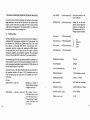
Drum Pitch
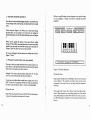
In common with other drum machines, each drum has a notenumber; unfortunately, different machines use different numbers.
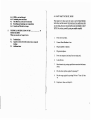
The Music Machine uses the following note numbers:
Middle C
= 1, c# = 2, D = 3, and so on.
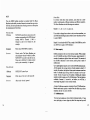
If you wish to change those values to suit your drum machine, you
can POKE the following locations with the note value that you want
to send to MIDI:
Sample 1 is associated with 8187 hex, sample 2 with 8188 hex, and so
on. (8187 hex is equal to 33159 decimal.)
Oppppppp
Pitch value. 00100000 is middle C.
5.2 Musie capacity
Ovvvvvvv
Velocity value. The Music Machine can
only recognise velocity Owhich is, in etTect,
NOTE OFF or another value for note on.
There are no facilities for volume control
and so, quite reasonably, it is ignored.
RAM is consumed at the rate of one byte per sample. With a sample
rate of 19.444 kHz and about 22K of data space, approximately 1.1
seconds of continuous digitised data can be stored. The amollOt of
free RAM is indicated on most screens, and is given in units of
milliseconds.
Note-otT event:
lOOOnnnn
NOTE-OFF control byte
Oppppppp
Pitch value of the note to be turned otT.
Ovvvvvvv
After-touch velocity, ignored.
Up to eight digitised samples can be stored in RAM simultaneously.
At full capacity, the average duration of each sample is about 0.15
seconds. In practice, the digitised drum sounds consume around one
tenth of a second each, leaving a third of a second or so for usersounds. You do of course have the option of deleting the resident
samples in order 10 make use ofthe full data space. The total duration
available of around 1.1 seconds is, we believe you will find, a
surprisingly long time for most musical sounds.
A song or rhythm can comprise a sequence ofup to 255 ditTerent bars.
Because most music repeats a range of bars, the fmal song or drum
sequence can last very many minutes.
5.3 AdditionaI notes
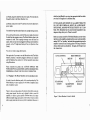
You must use headphones whose lead is terminated with a 3.5 mm
stereo jack plug as a mono plug may short the output and you will
36
37