1
NICHOLAS M. BOERS ET. AL: SUPPORTING WIRELESS APPLICATION DEVELOPMENT VIA VIRTUAL EXECUTION
855
special packets, and assigning to them the so-called disposition
codes representing various processing stages. Any protocol
can be implemented within this paradigm, with TARP (our
Tiny Ad hoc Routing Protocol [20], [21]) being the most
prominent example. The modus operandi of VNETI is that
packets are claimed by the protocol plug-ins as well as the
physical interface modules (PHY) at the relevant moments of
their life in the module’s buffer space. There is no explicit
concept of processing hierarchy, e.g., enforcing traditional
layers; thus, packets in VNETI are handled “holistically.”
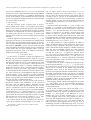
Fig. 3: The structure of a VUE2 model.
The close relationship between PicOS and our discrete-time
event-driven network simulator named SMURPH [16], [17]
makes it possible to automatically transform PicOS praxes
into SMURPH models with the intention of executing them
virtually. VUE2 implements the PicOS API within SMURPH,
and in some cases, it can simply transform PicOS keywords
into their SMURPH counterparts. To represent the physical
environment of a PicOS praxis, it also provides a collection
of event-driven interfaces. This way, a praxis can be compiled
and executed in the environment shown in Fig. 3, with all
the relevant physical elements of its node replaced by their
detailed SMURPH models. Notably, exactly the same source
code of VNETI is used in both cases.
the model execution too long to wait for the results), and
all that matters is the abstract delays separating the virtual
events. For example, two threads in SMURPH may be semantically equivalent, even though one of them may exhibit
a drastically shorter execution time than the other, e.g., due
to more careful programming and/or optimization. In PicOS,
however, the threads are not (just) models but they run the
“real thing.” Consequently, the execution time of a thread may
directly influence the perceived behavior of the PicOS node.
In this context, the following two assumptions made the VUE2
project worthwhile:
1) PicOS programs are reactive, i.e., they are practically
never CPU bound. The primary reason why a PicOS
thread is making no progress is that it is waiting for
a peripheral event rather than the completion of some
calculation.
2) If needed (from the viewpoint of model fidelity), an
extensive period of CPU activity can be modeled in
SMURPH by appropriately (and explicitly) delaying
certain state transitions.
In most cases, we can ignore the fact that the execution
of a PicOS program takes time at all and only focus on
reflecting the accurate behavior of the external events. With
this assumption, the job of porting a PicOS praxis to its VUE2
model can be made simple. To further increase the practical
value of such a model, SMURPH provides for the so-called
visualization mode of execution. In that mode, SMURPH tries
to map the virtual time of modeled events to real time, such
that the user has an impression of talking to a real application.
This is only possible if the network size and complexity allow
the simulator to catch up with the model execution to real
time; otherwise, a suitable slow motion factor can be applied.
A. Time flow
B. Model scope
The fidelity of the emulation environment depends to a
great extent on appropriately handling the flow of time, i.e.,
equating emulated time with real time. In SMURPH, as in all
event-driven simulators, the time tags associated with events
are purely virtual. The actual (physical) execution time of a
SMURPH thread is essentially irrelevant (unless it renders
SMURPH threads are programmed in C++, which we
have extended with new keywords and constructs. A special
preprocessor (dubbed SMPP) processes the SMURPH source
to produce pure C++ code. PicOS praxes are programmed
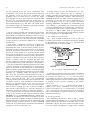
in plain C with the assistance of a few macros (see Fig. 1)
expanded by the standard C preprocessor. Putting trivial syn-
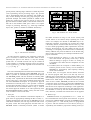
Fig. 2: The structure of PicOS.
All API functions interfacing the application (called the
praxis in PicOS) to VNETI have the same status as those
interfacing the praxis to the kernel, i.e., they are formally
system calls. As a thread in PicOS can only be resumed at
a state boundary, a potentially blocking system call requires
a state argument (e.g., the first argument in the function call
tcv_rnp in Fig. 1).
III. VUE2