1
854
PROCEEDINGS OF THE IMCSIT. VOLUME 3, 2008
the API supported by the OS, and to subsequently offer
virtualization at the level of that API. Note that in following
this approach, we do not need a new toolchain for code
production, since we neither have to invent a new higher
level language nor do we need to procure a compiler back
end for a new (invented) instruction set. In this paper, we
focus on the interplay of PicOS (our operating system for tiny
microcontrolled devices [11]) and VUE2 (the Virtual Underlay Emulation Engine for realistically simulating networked
applications programmed in PicOS).
II. P IC OS
The most serious problem with implementing non-trivial,
structured, multitasking software on microcontrollers with
limited RAM is minimizing the amount of memory resources
needed to sustain a thread. The most troublesome component
of the thread footprint is its stack, which must be preallocated
to every thread in a safe amount sufficient for its maximum
possible need.
PicOS strikes a compromise between the complete lack
of threads and overtaxing the tiny amount of RAM with
fragmented stack space. A thread contains a number of checkpoints that provide preemption opportunities. In the imposed
structured organization of a thread, we try to (a) avoid locking
the CPU at a single thread for an extensive amount of time
and (b) use the checkpoints as a natural and useful element
of a thread’s specification to enhance its clarity and reduce its
structure’s complexity. These ideas lie at the heart of PicOS’s
concept of threads, which are structured like finite state
machines (FSMs) and exhibit the dynamics of coroutines [12],
[13] with multiple entry points and implicit control transfer.
The value of FSM-like programming abstractions is evident
to anyone developing networking protocols, as most protocols
tend to be described, or even formalized, as communicating
FSMs. In addition, programming using a coroutine paradigm
is a fairly well-accepted approach and has survived in modern
languages (e.g., “stackless” Python [14] and more recently
Ruby [15]). The only general criticism coroutines receive is
that the lack of arbitrary preemption might allow CPU-bound
tasks to monopolize the CPU. This is not a fundamental
problem, because a CPU-bound task can be broken down into
a sequence of states to allow preemption at state transitions.
However, an important element of our view is to use the
coroutine paradigm as a means to discourage CPU-intensive
tasks on sensors. Instead, any tasks of this kind should be
either moved to data collectors (i.e., full-scale computers) or
delegated to specialized (possibly reconfigurable) hardware.
On a historical note, we arrived at PicOS indirectly as
a step in the evolution of our network simulation system
SMURPH [16], [17]. As SMURPH underwent a number of enhancements, its capability for rigorous representation of all the
relevant engineering problems occurring in detailed protocol
design turned it into a specification system. Although oriented
towards modeling networks and their protocols, SMURPH
became a de facto general purpose specification and simulation
package for reactive systems [18], [19].
A highly practical project—the development of a lowcost wireless badge—inspired the idea to implement a
complete executable environment for microcontrollers based
on SMURPH’s programming paradigm. After developing a
SMURPH model for the badge, the most reliable way of
transporting it to the real device was to implement the target microprogram on top of a tiny execution environment
mimicking SMURPH’s mechanism for multithreading and
event handling [11]. Incidentally, that mechanism facilitated
a stackless implementation of multithreading. Consequently,
the resultant footprint of the complete application was trivially small (< 1 KB of RAM), while the application itself
was expressed as a structured and self-documenting program
strictly conforming to its SMURPH model.
A. The anatomy of a PicOS thread
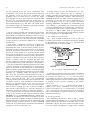
Fig. 1 shows a sample PicOS thread. In this C code, new
keywords and constructs are straightforward macros handled
by the standard C preprocessor. The entry statements mark
the different states of the thread’s FSM.
Fig. 1: Code for a sample PicOS thread.
A thread can lose the CPU when (a) it explicitly relinquishes
control at the boundary of its current state (e.g., release) or
(b) a function call blocks (e.g., tcv_rnp if no new packets
are available). In both cases, the CPU returns to the scheduler,
which can then allocate it to another thread. Whenever a thread
is assigned the CPU, execution continues in that thread’s
current state.
Before executing release, a thread typically issues a
number of wait requests identifying one or more events to
resume it in the future (e.g., when for IPC and delay for timed
events). The collection of wait requests issued by a thread in
every state describes the dynamic options for its transition
function from that state.
B. System organization
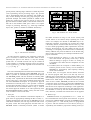
The organization of PicOS is shown in Fig. 2. VNETI
(Versatile NETwork Interface) acts as a layerless networking
module, whereby the equivalents of “protocol stacks” are implemented as plug-ins. The set of operations available to plugins involve queue manipulations, cloning packets, inserting