1
This device falls under protection-class I, therefore it is essential that the device be grounded. The electrical connection must be
carried out by a qualified technician.
The device should only be used with rate voltage and frequency. Make sure that the available voltage is not higher than 120V as
stated at the end of this manual.
Make sure the power cord is never crimped or damaged in any way, as this could cause shock and damage. If your power chord is
damaged in any way, please purchase a new cable from your local MICROH dealer. Always disconnect power, when the device is
not in use or before cleaning it. Never pull out the plug by tugging the power cord.
During initial start-up, some smoke or smell may arise. This is a normal process, and does not necessarily mean that the device is
defective. It should decrease gradually. Please do not project the beam onto combustible substances.
Fixtures cannot be installed on or near combustible substances. Keep more than 50cm distance from wall for proper ventilation and
air flow. If your fixture is or has become damaged in any way, it shall be exclusively replaced or repaired by the manufacturer to
avoid any hazard.
To be installed on a fixed flat surface in a level position. Prevent this product from strong vibration or impact. Do not use under
shaking conditions.
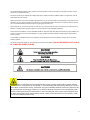
Do not turn on this fixture frequently, as it will shorten the life of the laser diodes. THIS
UNIT REQUIRES A DUTY CYCLE
OF 15 MINUTES EVERY 2 HOURS.
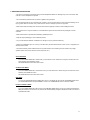
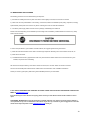
Class 4 is the highest and most dangerous class of laser, including all lasers that exceed the Class 3B
AEL. By definition, a class 4 laser can burn the skin, or cause devastating and permanent eye damage as a result of
direct, diffuse or indirect beam viewing. These lasers may ignite combustible materials, and thus may represent a fire
risk. These hazards may also apply to indirect or non-specular reflections of the beam, even from apparently matte
surfaces—meaning that great care must be taken to control the beam path. Class 4 lasers must be equipped with a
key switch and a safety interlock. Most industrial, scientific, military, and medical lasers are in this category, notably
those at the US National Ignition Facility.
2