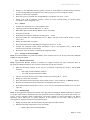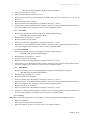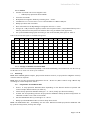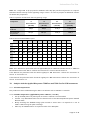
1
Instructions For Use
1.
Name and Intended Use
Epi proColon 2.0 CE is a qualitative assay for the real-time PCR detection of methylated Septin9 DNA in
bisulfite converted DNA from human plasma samples. Presence of methylated Septin9 is associated
with, and may aid in, the detection of colorectal cancer.
Epi proColon 2.0 CE is comprised of the Epi proColon Plasma Quick Kit (M5-02-001), the Epi proColon
Sensitive PCR Kit (M5-02-002) and the Epi proColon Control Kit (M5-02-003).
2.
Summary and Explanation
Epi proColon 2.0 CE is an in vitro polymerase chain reaction (PCR) assay for the qualitative detection of
Septin9 gene methylation in DNA isolated from 3.5 ml of patient plasma. Cytosine residues in the v2
region of the Septin9 gene become methylated in colorectal cancer (CRC) tissue but not in normal
colon mucosa. This aberrant methylation can be detected by specific amplification of DNA present in
the blood stream. Detection of CRC DNA in plasma using the Septin9 methylation biomarker has been
demonstrated in multiple case control studies of CRC patients and colonoscopy-verified negative
controls1-3. The blood-based Epi proColon 2.0 CE offers patients, who currently refuse screening
colonoscopy, a reasonable alternative to non-invasive CRC screening options.
3.
Principles of the Procedure
Epi proColon 2.0 CE involves two steps. In the first step DNA is extracted from plasma followed by
bisulfite conversion of the purified DNA using the Epi proColon Plasma Quick Kit (M5-02-001). In the
second step bisulfite converted DNA (bisDNA) is assayed in a duplex PCR using the Epi proColon
Sensitive PCR Kit (M5-02-002) which detects both the target methylated Septin9 DNA and an internal
control, ACTB (ß-actin) DNA, to assess adequacy of input DNA. Controls provided with the
Epi proColon Control Kit (M5-02-003) are required as positive and negative controls for each run.
The extraction of DNA contained in patient plasma is based on the binding of free-circulating DNA to
magnetic particles, which are then magnetically separated from the plasma. Remaining impurities are
removed from the magnetic particles during the washing steps. In the elution step purified DNA is
removed from the magnetic particles by dissolving in elution buffer. The eluate containing DNA is then
subjected to a chemical reaction that specifically alters unmethylated cytosine residues within the DNA.
Bisulfite treatment is utilized as the method of choice for analyzing DNA methylation. The conversion is
based on the nucleophilic addition of a bisulfite ion to a cytosine nucleotide and a subsequent
deamination reaction to yield uracil sulfonate, while 5-methylcytosine (methylated cytosine) does not
undergo the deamination reaction and remains unchanged.
The blockers and probes used in the subsequent PCR reaction discriminate between methylated and
unmethylated sequences. Epi proColon 2.0 CE detects a bisDNA sequence containing methylated CpG
sites within the v2 region of the Septin9 gene and total bisDNA of a region of the ACTB gene. The
Septin9 portion of the duplex assay consists of primers that are placed in regions lacking CpG
dinucleotides. A blocker specific for bisulfite converted unmethylated sequences within the region is
added so that methylated sequences are preferentially amplified. A methylated Septin9-specific
fluorescent detection probe is used in the reaction in order to exclusively identify methylated sequences
amplified during the PCR reaction4.
Page 3 of 30