1
2-36. The Seating Problem
3-1. Safe Rules and Constraints
3-2. Unsafe Rules and Constraints
3-3. Safe Rules and Constraints
3-4. Unsafe Rules and Constraints
3-5. Not finite domain program
3-6. Not finite domain program
3-7. Finite domain program
3-8. Program generating ever longer lists
3-9. Lists growing both in length and in nesting
4-1. Queries:
4-2. An example for non-ground brave reasoning
4-3. A query with multiple variable occurrences
4-4. A query with negation
4-5. An example for succeeding ground brave reasoning
4-6. Failing ground brave reasoning
4-7. An example for non-ground cautious reasoning
4-8. Succeeding ground cautious reasoning
4-9. Failing ground cautious reasoning
4-10. Succeeding cautious reasoning, if the program does not have any model
4-11. Plain Disjunctive Datalog query
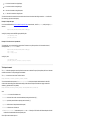
8-1. Simple table import
8-2. Transitive closure on imported table
8-3. Exporting a transitive closure
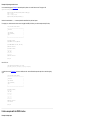
8-4. Simple import
8-5. 3-coloring with tuple insertion
8-6. 3-coloring with tuple replacement
Overview
DLV is a deductive database system, based on disjunctive logic programming, which offers front-ends to several advanced KR formalisms.
More information (including an online version of this manual) and executables for several platforms are available at the DLV homepage
(http://www.dlvsystem.com/).
Chapter 1. Getting Started
This is just a quick introduction to Disjunctive Datalog and DLV. For a more thorough and formal definition refer to Chapter 2.
You can invoke DLV directly on the command-line. If you do not specify any options or files, DLV will just print some informational output:
$ DLV
DLV [build BEN/May 23 2004
gcc 2.95.4 20011002 (Debian prerelease)]
usage: DLV {FRONTEND} {OPTIONS} [filename [filename [...]]]
Specify -help for more detailed usage information.
The first line will most probably look different with your installation. It first tells you which program this is, then it gives information about the version. This
consists of the identifier BEN, which stands for "benchmark version",
Note: Versions other than BEN should only be used for development purposes!
the date when the binary was built, and the identifier of the compiler. Usually, you will not have to bother with these gory details, but please include this
information when you are reporting a bug or asking for support.
If you do not want to see this status line, use the -silent option, which suppresses various informational output and blank lines.
$ DLV -silent
usage: DLV {FRONTEND} {OPTIONS} [filename [filename [...]]]
Specify -help for more detailed usage information.